
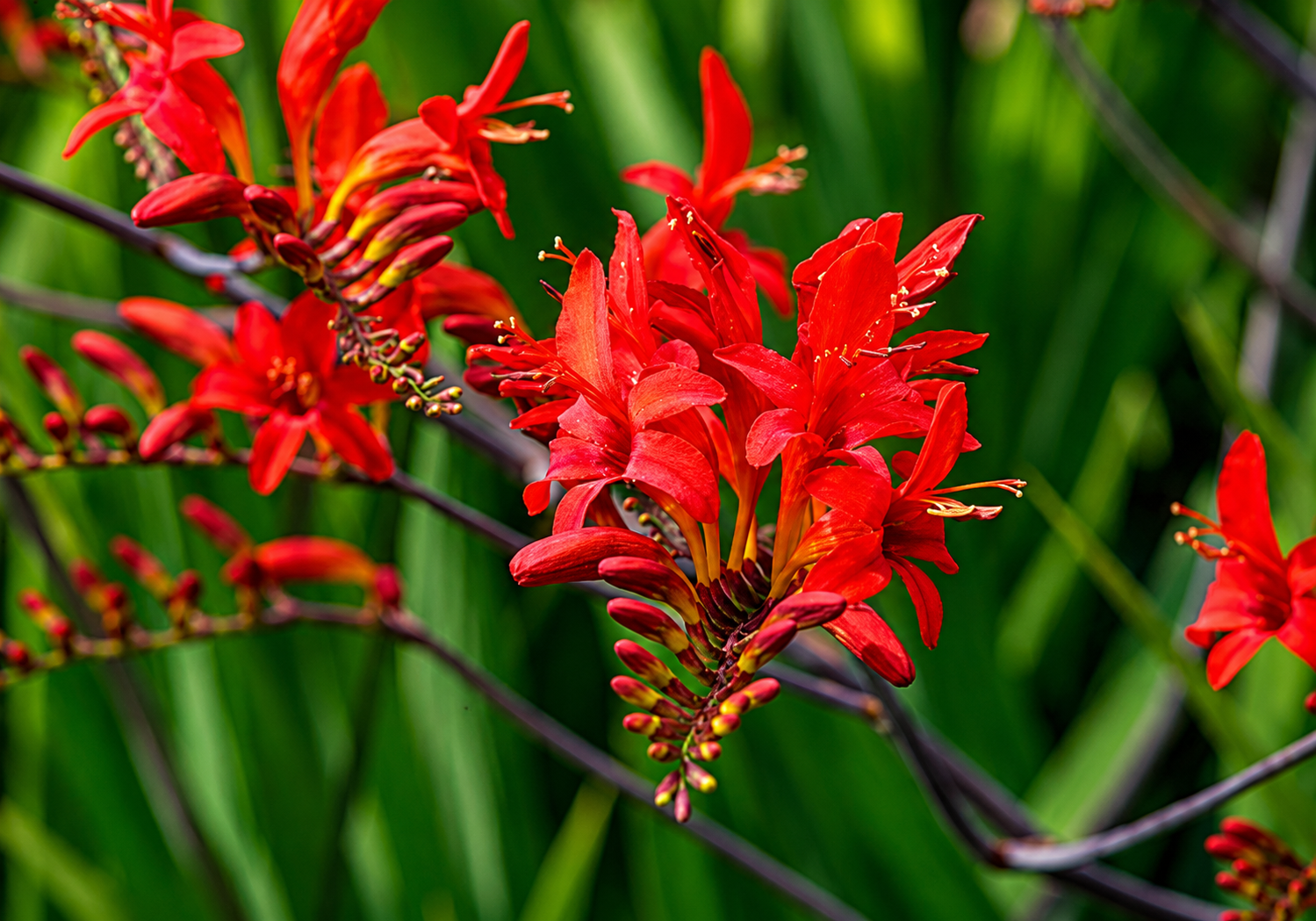
Crocosmia in the Northeast: A Bold, Reliable Perennial for Color-Driven Landscapes
If you’re looking for a perennial that delivers intense color, movement, and reliability in Northeast landscapes, crocosmia deserves a serious look. Known for its fiery red, orange, and yellow blooms and its graceful, arching foliage, crocosmia brings drama without demanding constant care. It bridges the gap between ornamental grasses and flowering perennials, adding both structure and seasonal flair.
In this in-depth guide, we’ll explore everything homeowners, designers, and landscape professionals need to know about growing crocosmia in the Northeast—from climate performance and soil requirements to design ideas, maintenance, and common mistakes to avoid.
What Is Crocosmia?
Crocosmia is a summer-blooming perennial grown from corms (similar to bulbs). It produces sword-shaped, upright foliage and tall flower spikes topped with funnel-shaped blooms that open sequentially. This extended bloom habit creates weeks of color, typically from late June through August, depending on the variety and location.
Native to South Africa, crocosmia has proven surprisingly adaptable, performing exceptionally well in the Northeast when planted correctly. Its bold form and vibrant hues make it a standout in both traditional and contemporary landscapes.
Why Crocosmia Works So Well in the Northeast
The Northeast presents unique challenges—cold winters, humid summers, clay soils, and fluctuating spring temperatures. Crocosmia checks many boxes for success in this region.
Cold Hardiness:
Many crocosmia varieties are hardy to USDA Zones 5–9, which covers most of New York, New England, and the Mid-Atlantic. In colder inland areas, a layer of mulch helps ensure winter survival.
Heat and Humidity Tolerance:
Unlike many perennials that struggle in humid summers, crocosmia thrives in warmth. In fact, heat helps it bloom more vigorously.
Deer and Rabbit Resistance:
One of crocosmia’s biggest advantages is that it is rarely browsed by deer or rabbits, making it an excellent choice for properties near wooded areas or preserves—common throughout the Northeast.
Drought Tolerance Once Established:
After the first growing season, crocosmia becomes fairly drought tolerant, especially in well-drained soils.
Popular Crocosmia Varieties for Northeast Landscapes
Choosing the right variety makes a big difference in performance and design impact.
‘Lucifer’
The most well-known variety, ‘Lucifer’ produces intense scarlet-red flowers on tall, dramatic stems. It’s vigorous, reliable, and perfect for bold borders or mass plantings.
‘Emily McKenzie’
Slightly shorter and more compact, this variety features burnt-orange blooms with darker centers, ideal for mixed perennial beds.
Crocosmia masoniorum:
A species variety with strong architectural form and bright orange flowers. Excellent for naturalized or meadow-style plantings.
Yellow and Bi-Color Hybrids
Less common but growing in popularity, these softer-toned varieties work beautifully in cottage gardens or alongside ornamental grasses.
Ideal Planting Conditions
Sun Exposure:
Crocosmia performs best in full sun, defined as six or more hours of direct sunlight per day. While it can tolerate partial shade, too much shade leads to floppy stems and reduced flowering.
Soil Type:
Well-drained soil is critical. Crocosmia does not tolerate standing water, especially in winter. Sandy loam is ideal, but clay soils can work if amended with compost and drainage material.
Drainage Is Key:
In the Northeast, winter moisture is more damaging than cold. Raised beds or sloped planting areas are excellent solutions for heavier soils.
When and How to Plant Crocosmia
Best Planting Time:
Plant crocosmia corms in spring, after the danger of hard frost has passed and soil temperatures reach about 55°F.
Planting Depth and Spacing:
- Depth: 3–5 inches
- Spacing: 6–12 inches apart, depending on desired density
Planting in groups creates a more dramatic and natural look than single specimens.
First-Year Care:
Water regularly during the first growing season. Establishment is the most critical phase—once roots develop, crocosmia becomes much more self-sufficient.
Seasonal Care and Maintenance
Watering:
Regular watering during establishment is important. Mature plants typically only need supplemental water during extended dry periods.
Fertilizing:
Crocosmia is not a heavy feeder. A light application of compost in spring is usually sufficient. Excess fertilizer can encourage leafy growth at the expense of flowers.
Staking:
Taller varieties may need discreet staking in windy locations. Planting crocosmia among supportive neighbours like ornamental grasses can reduce the need for stakes.
Deadheading and Cleanup:
Removing spent flower stalks keeps the plant tidy, but it’s not required. Leave foliage in place until it yellows naturally—this allows energy to return to the corms.
Winter Protection in the Northeast:
In milder coastal areas, crocosmia often overwinters without intervention. In colder inland zones:
- Apply 2–4 inches of mulch after the ground freezes
- Avoid wet mulch directly against the crown
- Do not cut foliage too early in fall
Proper drainage plus light mulching is usually all that’s needed.
Landscape Design Uses for Crocosmia
Crocosmia is incredibly versatile and works across many design styles.
Mixed Perennial Borders
Its upright foliage contrasts beautifully with rounded perennials like coneflowers, black-eyed Susans, and salvias.
Ornamental Grass Pairings
Planted with grasses such as switchgrass or feather reed grass, crocosmia adds bold color to soft, flowing textures.
Pool and Patio Landscapes
Because it’s low-litter and deer resistant, crocosmia is an excellent choice near patios, pools, and outdoor living areas.
Naturalized and Meadow Gardens
When allowed to spread naturally, crocosmia creates a striking mid-summer display in informal landscapes.
Wildlife and Pollinator Benefits
Crocosmia is a hummingbird magnet. Its tubular flowers are perfectly shaped for hummingbirds and also attract bees and butterflies. For homeowners interested in pollinator-friendly landscapes, crocosmia provides high visual impact without sacrificing ecological value.
Common Problems and How to Avoid Them
Too Much Shade
Leads to weak stems and fewer flowers. Always prioritize sun exposure.
Poor Drainage
The most common cause of winter loss. Improve drainage before planting rather than trying to fix it later.
Overcrowding
Crocosmia multiplies over time. Divide clumps every 3–5 years in spring to maintain vigor and flowering.
Invasiveness Concerns
In some regions, crocosmia can spread aggressively. In the Northeast, this is typically manageable with periodic division and thoughtful placement.
Crocosmia in Professional Landscape Design
For professional landscape designers in the Northeast, crocosmia is a valuable tool. It offers:
- Strong vertical lines
- High-impact color during peak outdoor living season
- Low maintenance once established
- Compatibility with modern, traditional, and naturalistic designs
It’s especially effective in large-scale residential projects where bold plant masses are needed to balance hardscape elements like stone walls, patios, and pools.
Final Thoughts: Is Crocosmia Right for Your Landscape?
Crocosmia is not a subtle plant—and that’s exactly its strength. When used intentionally, it delivers weeks of vivid color, architectural form, and dependable performance in Northeast conditions. With proper sun, drainage, and spacing, it becomes a long-lived, low-maintenance feature that elevates the entire landscape.
Whether you’re refreshing an existing garden or designing a new outdoor space from scratch, crocosmia offers a bold, professional look that thrives in the Northeast climate—season after season.