
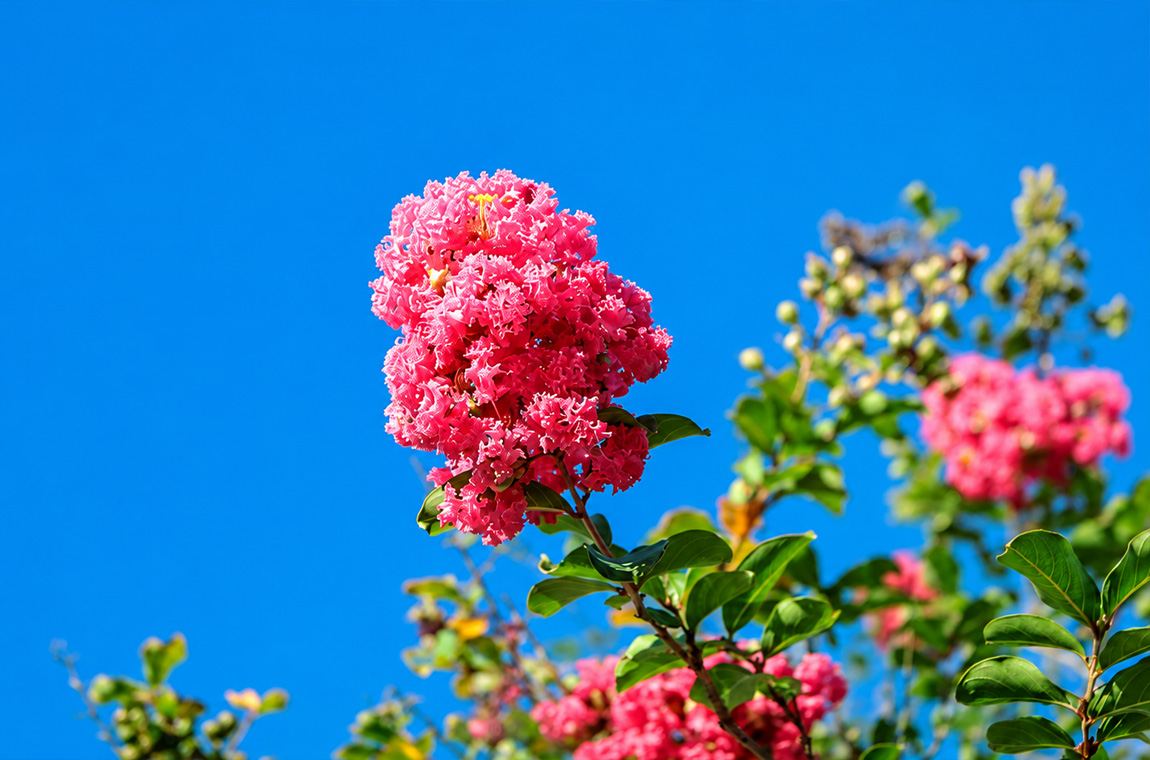
Crape Myrtle Lagerstroemia
Few flowering shrubs offer the color, season long interest, adaptability, and garden versatility of crape myrtle Lagerstroemia. Grown from compact dwarf shrubs to towering tree forms, crape myrtles are valued for their mid to late summer bloom, decorative bark, fall foliage, and ease of care in hot sunny sites.
Whether you are planting a small patio garden, foundation border, mixed perennial bed, or a pollinator friendly landscape, crape myrtle has something for nearly every setting, especially in zones 6 to 9 and beyond.
A Little Background on Crape Myrtle
Also spelled crepe myrtle, and sometimes called crape flower, this group of ornamental flowering shrubs and small trees belongs to the Lagerstroemia genus in the loosestrife family. Native to parts of Asia and Australia, crape myrtle has become widely cultivated in warm temperate climates because of its long lasting summer flowers, striking exfoliating bark, and varied size forms ranging from dwarf shrubs under a few feet tall to small trees over 15 to 20 ft tall.
Gardeners often compare it to a southern staple, especially in the U.S. South, for its brilliant florals in shades from white and pink to red and purple.
What Makes Crape Myrtle So Attractive in Gardens
Before we dive into the specific cultivars, let us summarize why crape myrtle is beloved.
Long Blooming Season: Flowers appear from mid summer into early fall on new wood, often continuing for weeks with proper care.
Great Color Variety: Cultivars range from pure white to deep red and rich pinks.
Multi Season Interest: Aside from flowers, attractive foliage transitions to rich fall hues, and the exfoliating bark adds winter structure.
Heat and Drought Tolerance: Once established, crape myrtles thrive in sunny, warm conditions with moderate water.
Flexible Landscape Use: Ideal for specimen plants, borders, containers, hedges, and mass planting.
Natural Deer Resistance: Though not completely deer proof, their leathery foliage and woodiness tend to make them less appealing to deer compared with many tender perennials.
Now let us explore specific cultivars, perfect for different garden needs.
Crape Myrtle Cherry Dazzle Dwarf Red
One of the showiest dwarf crape myrtles, Cherry Dazzle brings an intense red display to the summer garden.
Characteristics
Size: Typically about 2 to 3 ft tall and 3 to 4 ft wide in smaller forms. Some sources list up to 3 to 5 ft in height and width.
Flowers: Rich cherry red panicles covering the plant from mid summer through fall.
Foliage: Leaves emerge bronze, mature to dark green, and can turn red purple in autumn.
Habit: Compact and arching, great for borders, mixed shrub beds, or container accent plantings.
Culture: Best in full sun and well drained soil, with good drought tolerance once established.
Care: Low maintenance and relatively disease resistant, drought adaptable.
Why It Is Great
Cherry Dazzle is ideal if you want a bold red flowering shrub without a large footprint. Its striking blooms remain visible all season and pair beautifully with late summer bloomers like salvia, Russian sage, or ornamental grasses for a colorful mixed bed.
Crape Myrtle Diamond Dazzle White Dwarf
If you prefer elegant whites, Diamond Dazzle offers pure white blooms in a compact, mounding form.
Characteristics
Size: Typically 3 to 4 ft tall and 3 to 4 ft wide.
Flowers: Profuse white flower panicles appear from summer into fall.
Foliage: Glossy dark green leaves provide a stunning backdrop.
Growth Habit: Dense, dwarf mounded shrub, excellent for repeating in borders, forming low hedges, or anchoring small garden spaces.
Maintenance: Low maintenance, easy to grow in full sun.
Landscape Uses
Diamond Dazzle excels in mixed shrub borders and foundation plantings where a lighter color contrast is desired. Its white flowers also play beautifully with deep leaf evergreens or dark foliaged perennials like black eyed Susans and ornamental grasses.
Crape Myrtle Pocomoke Dwarf Pink Shrub Deer Resistant
Pocomoke is a true dwarf crape myrtle with abundant deep pink blooms and excellent disease tolerance, and it is often noted for being deer resistant.
Characteristics
Size: Compact dwarf shrub, often 2 to 5 ft tall and similarly wide.
Flowers: Deep rose pink panicles from midsummer into fall.
Foliage: Foliage opens maroon, matures to dark green, and often turns bronze red in fall.
Hardiness and Care: Thrives in full sun, well drained soil, and tolerates heat and drought once established.
Resistance: Shows good resistance to mildew and many common diseases, and is routinely found on deer resistant plant lists due to unpalatable foliage and woody stems.
Why Gardeners Love It
Pocomoke is perfect for garden edges, smaller yards, and container gardens where space is limited but long bloom display is desired. Its neat rounded habit also makes it ideal for mass plantings or low hedges that add vibrant color without overwhelming other plants.
Crape Myrtle Pure Magic Often Called Purple Magic in Trade
While Pure Magic might be a name used in trade for compact crape myrtles, the closest and widely known variation in this theme is Purple Magic, a semi dwarf, purple flowering crape myrtle that shines with rich color and multi season appeal.
Characteristics
Size: Usually 6 to 10 ft tall and wide, smaller than many tree forms but larger than the compact dwarfs.
Flowers: Clusters of rich deep purple blooms on new wood.
Foliage: Glossy green leaves with seasonal color change. Foliage often resists disease like powdery mildew and leaf spot.
Reblooming: Deadheading spent blooms can encourage a second flush of flowers later in the season.
Best Uses
Purple Magic is a fantastic choice when you want a statement shrub with rich purple color, great as a specimen plant, in foundation beds, or part of a mixed flowering border where deeper hues balance lighter tones from other plants.
Caring for Your Crape Myrtles
Crape myrtles are appreciated partly because they are relatively low maintenance, but a little guidance helps them thrive.
Light and Site
Plant in full sun for best flowering, at least 6 or more hours of sun daily. Partial shade can result in fewer blooms and weaker color.
Soil and Water
Well Drained Soil: Well drained soil is ideal.
Water: Water deeply during establishment, then taper to maintenance watering once established.
Pruning
Crape myrtles bloom on new wood, so pruning should be done in late winter or early spring before new growth starts. Remove dead wood and lightly shape if needed. Avoid topping, commonly called crape murder, which can harm natural form and health.
Seasonal Interest
Besides flowers, most cultivars have attractive fall foliage, adding another display before leaf drop.
Design Ideas With Crape Myrtle
Crape myrtles are versatile across landscape designs.
Accent Specimen
Plant a single dwarf or semi dwarf variety near an entryway or focal point to draw the eye with summer blooms and year round structure.
Mixed Border
Combine dwarfs like Cherry Dazzle and Diamond Dazzle with perennial flowers such as salvia, coreopsis, and ornamental grasses for a layered color story from summer through fall.
Low Hedge or Border
Use repeat plantings of Pocomoke or other compact cultivars to create a flowering hedge that is both colorful and deer resistant.
Container Showcase
Dwarf crape myrtles perform beautifully in large containers on patios or decks. Just ensure good sun exposure and consistent watering.
Final Thoughts
From bright reds and pure whites to deep pinks and rich purples, crape myrtles deliver long season color, multi season interest, and landscape adaptability that few shrubs match. Whether you choose a dwarf bloom machine like Cherry Dazzle, a refined white beauty like Diamond Dazzle, a compact pink performer like Pocomoke, or a show stopping purple like Purple Magic, your garden will be rewarded with remarkable summer blooms and structural appeal.