
Coneflower (Echinacea): A Complete Guide to All Varieties
Coneflowers—botanically known as Echinacea—are among the most dependable, eye-catching, and ecologically valuable perennials you can plant. Loved by designers, gardeners, and pollinators alike, coneflowers offer bold color, rugged durability, and an almost carefree nature once established. Whether you’re designing a formal landscape, a meadow-style garden, or a low-maintenance perennial border, there is a coneflower variety perfectly suited for the job.
This in-depth guide explores all major coneflower varieties, their colors, growth habits, bloom times, and how to use them effectively in landscape design—especially in Northeast and Long Island conditions.
What Is a Coneflower?
Coneflowers are herbaceous perennials native to North America. Their name comes from the raised central cone (disk) surrounded by ray petals. That cone isn’t just decorative—it’s a nectar-rich magnet for bees, butterflies, and beneficial insects.
Key characteristics include:
- Upright, clump-forming habit
- Long bloom season (early summer through fall)
- Drought tolerance once established
- Excellent cold hardiness
- Strong resistance to deer and rabbits
- Outstanding pollinator value
Because of these traits, coneflowers are a cornerstone plant in sustainable and eco-friendly landscapes.
Native vs. Hybrid Coneflowers
Before diving into individual varieties, it’s important to understand the two broad categories:
Native Coneflowers:
These are straight species found naturally in North America. They tend to be:
- Extremely hardy
- Longer-lived
- More attractive to pollinators
- Less finicky about soil
Hybrid Coneflowers:
Modern breeding has produced hundreds of hybrids with:
- Expanded color palettes
- Double flowers
- Compact growth habits
- Improved disease resistance
Both types have a place in professional landscape design.
Echinacea purpurea (Purple Coneflower)
Purple coneflower is the most iconic and widely planted species.
Key Features:
- Height: 3–4 feet
- Spread: 18–24 inches
- Color: Purple-pink petals with coppery orange cone
- Bloom time: June through September
Popular Cultivars:
- Magnus – Large flowers, sturdy stems
- Ruby Star – Deep rose-purple
- Kim’s Knee High – Compact, perfect for small gardens
Best Uses:
- Perennial borders
- Pollinator gardens
- Meadow plantings
- Naturalized landscapes
This variety thrives in Long Island soils and handles both summer heat and winter cold with ease.
Echinacea angustifolia (Narrow-Leaved Coneflower)
This native prairie species is slightly more understated but incredibly tough.
Key Features:
- Height: 1–2 feet
- Narrow leaves
- Pale purple to pink flowers
- Exceptional drought tolerance
Landscape Value:
- Native restoration projects
- Sandy or poor soils
- Low-input landscapes
It’s slower to establish but rewards patience with longevity and resilience.
Echinacea pallida (Pale Purple Coneflower)
Recognizable by its long, drooping petals, Echinacea pallida adds graceful movement to garden designs.
Key Features:
- Height: 2–3 feet
- Light lavender petals
- Elegant, airy appearance
Best Uses:
- Prairie-style plantings
- Mixed perennial borders
- Naturalistic designs
This variety pairs beautifully with ornamental grasses.
Echinacea paradoxa (Yellow Coneflower)
Unlike most coneflowers, Echinacea paradoxa blooms in true yellow.
Key Features:
- Bright yellow petals
- Dark central cone
- Strong stems
Design Applications:
- Color contrast in mixed borders
- Native plant gardens
- Pollinator-focused landscapes
It also plays a key role in breeding many modern orange and gold hybrids.
White Coneflowers (Echinacea alba & Cultivars)
White coneflowers bring elegance and brightness to the landscape.
Popular Varieties:
- White Swan – Soft white petals, greenish cone
- PowWow White – Compact, heavy blooming
- Fragrant Angel – Large flowers with subtle scent
Best Uses:
- Formal gardens
- Moon gardens
- Modern landscapes
White coneflowers are especially effective when paired with dark foliage or stone features.
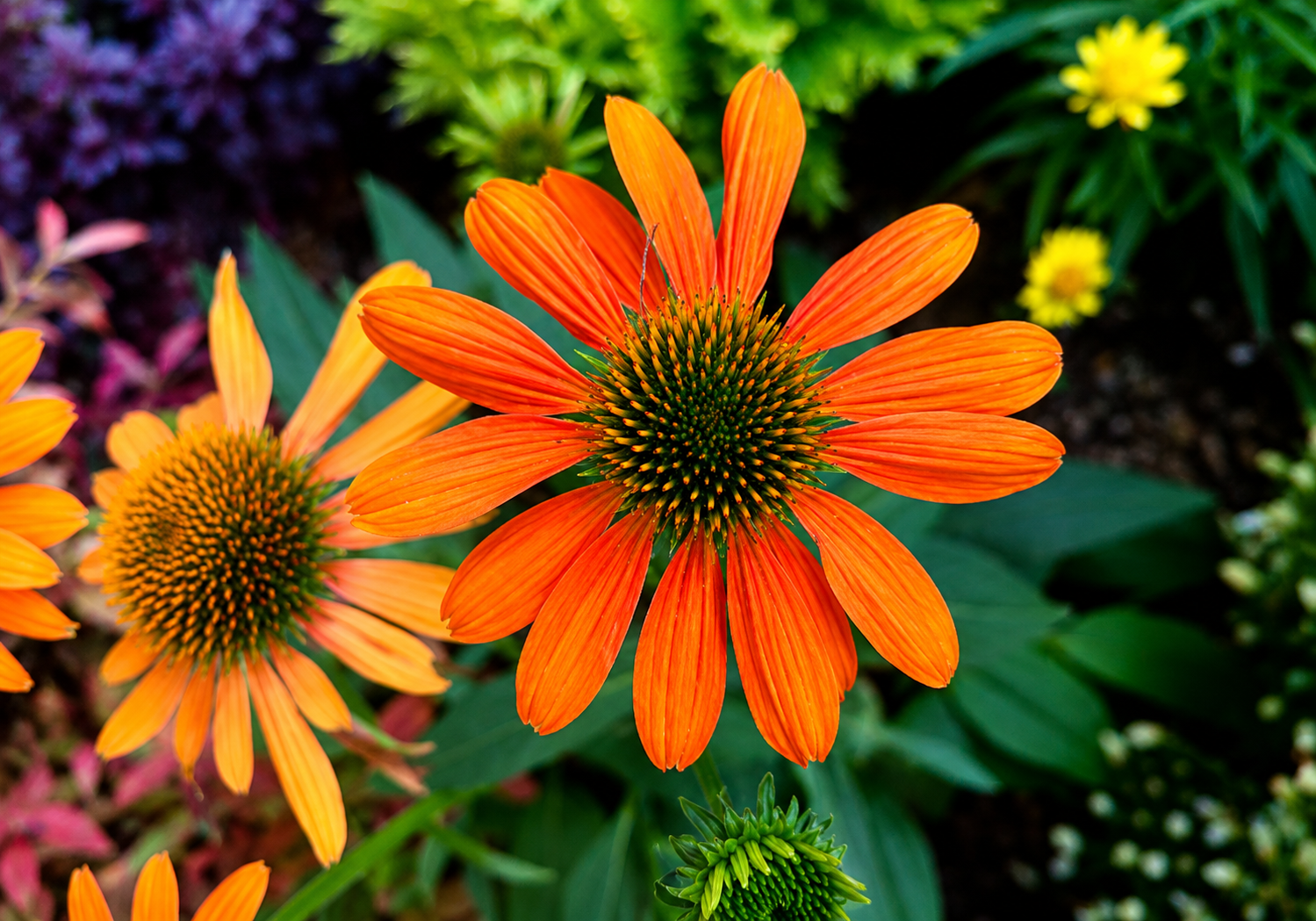
Orange, Red & Sunset-Toned Coneflowers
Hybrid breeding has expanded coneflowers into bold, warm tones.
Popular Colors:
- Orange
- Coral
- Red
- Apricot
- Flame
Standout Varieties:
- Cheyenne Spirit – Mixed warm tones
- Sombrero Hot Coral
- Kismet Intense Orange
Landscape Impact:
These varieties create dramatic focal points and work beautifully in contemporary designs.
Pink Coneflower Varieties Beyond Purple
Not all pink coneflowers are the same.
Modern Pink Cultivars:
- PowWow Wild Berry – Compact, vivid pink
- Pink Double Delight – Double-petaled blooms
- Fatal Attraction – Dark stems, magenta flowers
These varieties are excellent for layered perennial beds.
Green Coneflowers:
Green coneflowers offer a subtle, modern look.
Popular Varieties:
- Green Jewel – Lime green petals
- Green Twister – Green petals with pink tips
Design Uses:
- Contemporary landscapes
- Pairing with grasses
- Unique focal points
They’re conversation starters and perfect for high-end garden designs.
Double-Flowered Coneflowers
Double coneflowers feature extra layers of petals, creating a pom-pom effect.
Examples:
- Razzmatazz
- Pink Double Delight
- Butterfly Kisses
Considerations:
- Slightly less pollinator-friendly
- More formal appearance
- Best used sparingly
They shine in ornamental gardens and entryway plantings.
Compact & Dwarf Coneflowers
Perfect for smaller spaces and containers.
Top Picks:
- PowWow Series
- Kismet Series
- Little Magnus
Best Uses:
- Small gardens
- Front borders
- Patio containers
These varieties maintain all the benefits of standard coneflowers in a smaller footprint.
Coneflowers for Pollinators & Wildlife
Coneflowers are among the top pollinator plants in North America.
They attract:
- Honeybees
- Native bees
- Butterflies
- Beneficial insects
In fall and winter, birds—especially goldfinches—feed on the dried seed heads.
Leaving coneflowers standing through winter adds visual interest and supports wildlife.
Growing & Caring for Coneflowers
Sun Requirements:
- Full sun preferred
- Tolerates light shade
Soil Needs:
- Well-drained soil
- Tolerates clay and sandy soils
Watering:
- Regular during establishment
- Drought-tolerant once mature
Maintenance:
- Deadhead for extended bloom
- Leave seed heads for winter interest
- Divide every 3–5 years if needed
Coneflowers are among the lowest-maintenance perennials available.
Common Problems & Solutions
- Flopping stems: Too much shade or rich soil
- Powdery mildew: Improve air circulation
- Root rot: Avoid poorly drained soil
Choosing the right variety for your site prevents most issues.
Using Coneflowers in Landscape Design
Coneflowers work beautifully with:
- Ornamental grasses
- Black-eyed Susans
- Salvia
- Russian sage
- Yarrow
They are ideal for:
- Coastal landscapes
- Estate properties
- Eco-friendly designs
- Meadow and native gardens
Their adaptability makes them a designer’s favorite.
Why Coneflowers Belong in Every Garden
Coneflowers combine beauty, durability, and environmental value in one plant. With hundreds of varieties available—ranging from classic purples to fiery oranges and elegant whites—there’s a coneflower for every design style and property size.
Whether you’re building a pollinator-friendly landscape, refreshing a perennial border, or designing a sustainable garden that thrives with minimal maintenance, coneflowers are a proven, timeless choice.
If you’re looking to incorporate coneflowers thoughtfully into a professionally designed landscape, selecting the right varieties and placement can make all the difference. When used correctly, coneflowers don’t just fill space—they define it.