
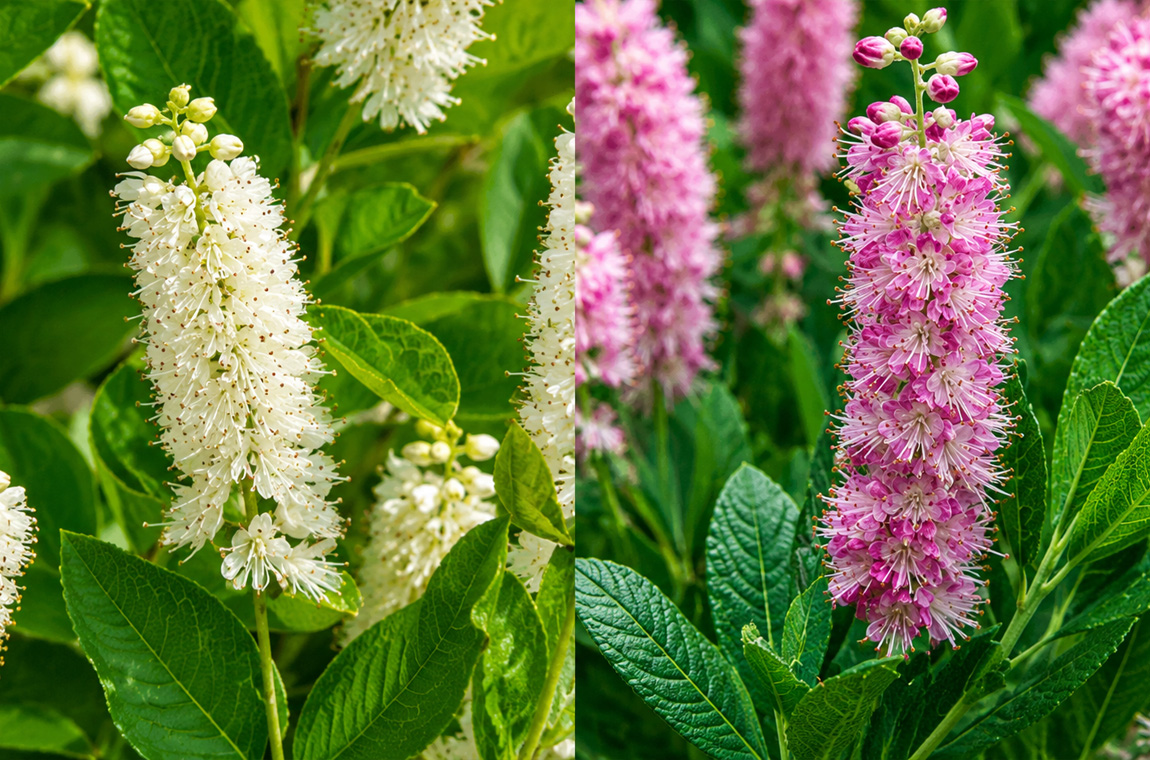
Clethra
If you want lush, fragrant blooms in mid to late summer, a pollinator magnet that hummingbirds love, and a shrub that is rarely bothered by deer, few shrubs deliver like Clethra, commonly called Summersweet or Sweet Pepperbush. This native North American shrub combines fragrant, bottlebrush like flowers, beautiful fall color, versatile adaptability, and deer resistance, making it a star in many landscapes.
What Is Clethra Summersweet?
Clethra, pronounced KLETH ruh, refers to a group of deciduous flowering shrubs in the family Clethraceae, most commonly represented by the species Clethra alnifolia, native to the eastern United States, especially along wetlands, woodlands, and streambanks.
Key Traits of the Genus
Fragrant, spire like blooms: Bottlebrush flower spikes that fill the garden with sweet scent during summer.
Deer resistance: Many cultivars and the species itself are rated as seldom severely damaged by deer, especially compared to many ornamental shrubs.
Pollinator magnets: Rich in nectar, Clethra flowers attract hummingbirds, bees, butterflies, and other beneficial insects.
Seasonal interest: Glossy green foliage in summer that turns bright yellow or golden in fall before dropping.
Moisture adaptability: Naturally found in moist soils and adaptable to wet conditions, making it great for rain gardens or sites with poor drainage.
Because of these traits, Clethra is particularly useful wherever deer browsing, wet soil, or late season color are garden concerns.
Deer Resistance Why Clethra Works
Many gardeners battle deer, especially in suburban and rural landscapes. While no plant is 100 percent deer proof, Clethra generally scores high on deer resistance ratings. Deer tend to leave mature Clethra shrubs alone because of leaf texture and fragrance, especially when other food sources are abundant.
This makes it a smart choice if you want lush flowering shrubs without constant browsing damage, particularly compared with plants like roses, daylilies, or hydrangeas, which deer often find tasty.
Pollinators and Wildlife Benefits
One of the best features of Clethra is its ability to attract wildlife.
Hummingbirds: Drawn to the nectar rich bottlebrush blooms, especially in cultivars with particularly abundant flowers.
Butterflies and native bees: Frequent visitors during peak bloom.
Beneficial insects: Hoverflies, bumblebees, and other pollinators also visit Clethra flowers.
Planting Clethra not only adds summer color to your garden, but it also supports local pollinator populations, making it a great choice for wildlife friendly landscapes.
Growing Conditions and Care
Clethra is remarkably adaptable, but knowing how to care for it helps you get the best performance.
Light
Part Sun to Full Sun: Clethra will bloom best with at least a few hours of sun each day, though it tolerates shade better than many flowering shrubs.
Soil and Moisture
Moist to Wet Soils: Excellent in average to consistently damp soils. It is native to swampy woodlands and stream banks, so it tolerates moisture well.
Acidic to Neutral Soil: Thrives in well drained acidic soils but will adapt to clay or sandy textures.
Size and Spread
Most Clethra cultivars reach 3 to 6 feet tall and wide, making them ideal for borders, foundation plantings, rain gardens, or mixed shrub beds.
Bloom Time
Mid to Late Summer: Clethra typically blooms from July through August, sometimes into early fall, a time when many garden plants are slowing down.
Fall Interest
Foliage often turns bright yellow or golden brown in autumn before dropping, adding another season of interest.
Pruning and Maintenance
Minimal Pruning: Light shaping after bloom is optional, or prune in early spring to maintain form. Since blooms form on new wood, dormant pruning will not remove next season's flowers.
Mulch and Water: A layer of mulch helps regulate soil moisture and temperature, especially in hot, dry summers.
Spotlight Popular Deer Resistant Clethra Cultivars
Below are some outstanding Clethra selections that combine fragrance, beauty, and wildlife benefits.
Clethra Vanilla Spice
This cultivar features pure white, extra large blooms with a sweet fragrance that fills a midsummer garden. Its glossy dark green foliage sets off the blooms beautifully, and it attracts both hummingbirds and butterflies. Deer generally avoid it, adding to its appeal.
Best for: Mixed borders, patio plantings, wet or semi shady spots
Bloom: Mid summer fragrant white panicles
Interest: Nectar rich, wildlife friendly
Clethra Alnifolia Vanilla Spice
This version of Vanilla Spice offers similar benefits with large white blooms, making it excellent for woodland or rain garden settings where moisture is high and deer pressure is a concern.
Clethra Ruby Spice Pink Flowered Showstoppers
If you love color, Ruby Spice is a standout cultivar with deep pink to rosy flower spikes that do not fade as they age, unlike some pink flowering shrubs. Its rose pink blooms are fragrant, nectar rich, and wildly attractive to hummingbirds and butterflies. Fall foliage typically turns rich golden yellow for added autumn interest.
Best for: Focal shrub in borders, foundation plantings, wildlife gardens
Color: Pink blooms in mid summer
Height and Spread: Usually around 3 to 6 feet tall and wide
Ruby Spice brings personality to landscapes where white flowers might be too subtle, and the scent is often described as sweet and spicy.
Hummingbird Clethra
While all Summersweet cultivars draw pollinators, the cultivar named Hummingbird is selected specifically for its compact, mounded habit and hummingbird appeal. This white flowered form is ideal in smaller gardens, rain gardens, or as part of a mixed shrub border where a neat shape is desired as well.
Best for: Small gardens or mixed shrub borders
Bloom: White fragrant flowers
Garden Design Ideas With Clethra
Clethra's versatility means it can fit many landscape roles. Here are some ways to use it well.
1. Pollinator Garden Anchor
Plant several Clethra shrubs together near perennials like coneflower, Echinacea, bee balm, Monarda, and asters to create a summer to fall nectar corridor that hummingbirds and butterflies will adore.
2. Rain Garden Hero
Because Clethra tolerates moist to wet soils, it is a great choice for rain gardens or areas with poor drainage, adding both structure and fragrance.
3. Woodland or Shade Garden
Pair with hostas, ferns, and shade tolerant grasses. Clethra brings late summer blooms to shady spaces where many shrubs struggle.
4. Foundation Accent or Hedge
Tall growing cultivars like Ruby Spice make excellent foundation shrubs or low informal hedges without feeling stiff.
5. Patio and Entertaining Spaces
Plant near patios or outdoor seating areas so you can enjoy both the scent and hummingbird visits up close.
Seasonal Interest Beyond Flowers
While the mid summer blooms and fragrance are Clethra's star attraction, the plant does not stop there.
Fall Color: Foliage shifts to warm yellow or golden hues in autumn.
Winter Structure: Bare branches still offer texture in winter gardens, especially in mixed evergreen and deciduous settings.
Root Suckering: Some cultivars may spread slightly via root suckers, which can help fill out informal hedge lines.
Growing Tips That Make a Difference
To get the most from your Clethra shrubs:
Plant for sun but tolerate shade: Flower production is best with some direct light, but Clethra manages partial shade too.
Keep soil moist, especially early on: Though drought tolerant once established, consistent moisture helps blooms and health.
Prune in spring if needed: Removing dead wood or shaping earlier in the year encourages healthy new growth without sacrificing flowers.
Mulch generously: Helps retain soil moisture and keep roots cool.
Final Bloom Why Clethra Belongs in Your Landscape
Clethra, especially deer resistant, fragrant cultivars like Vanilla Spice, Ruby Spice, and Hummingbird, is a garden powerhouse. With midsummer fragrance, hummingbird and butterfly attraction, beautiful fall color, and adaptability to moisture and shade, it checks nearly all the boxes for a low maintenance, high impact shrub.
Whether you are planting a wildlife garden, rain garden, woodland border, or simply want long season interest and structure, Clethra brings a combination of beauty and functionality that is hard to beat.