
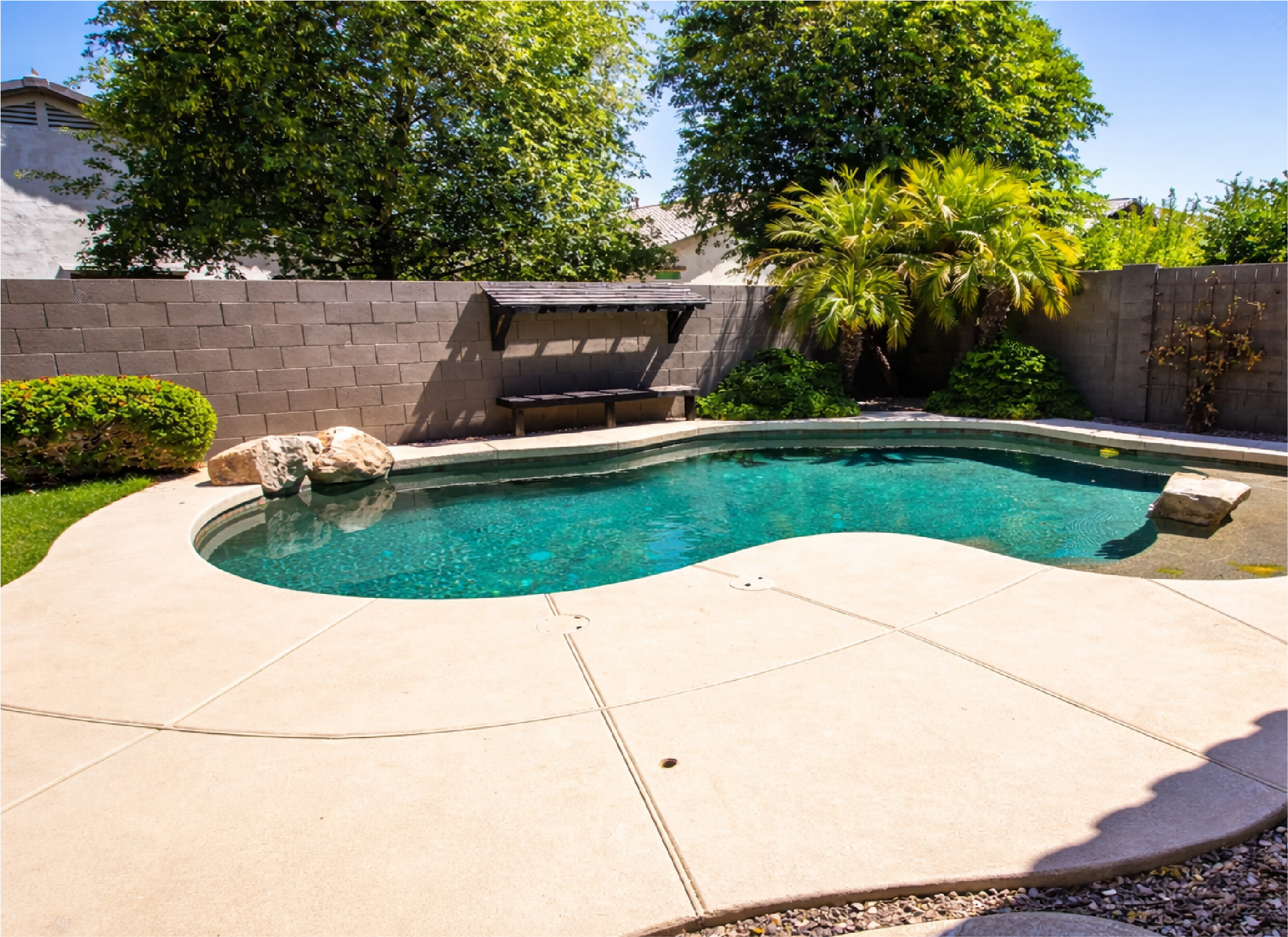
Choosing between a freeform pool and a geometric pool
Choosing between a freeform pool and a geometric pool is one of the most important design decisions homeowners make when planning a backyard renovation. The shape of your pool influences not only the look of your yard, but also how you entertain, how you landscape, and how the entire outdoor space functions.
At Louis Contino Landscaping, we design and build pools as part of complete outdoor environments—patios, planting, lighting, outdoor kitchens, and gathering spaces all working together. In this guide, we’ll break down:
- What freeform and geometric pools are
- Pros and cons of each style
- Landscaping ideas that complement both
- How to decide which pool type is better for your property and lifestyle
A freeform pool features curving, irregular lines inspired by nature. Think soft edges, organic shapes, and a flowing outline that blends into the surrounding landscape.
These pools are often associated with:
- Lagoon-style designs
- Rock waterfalls or grottos
- Beach-style entries
- Lush planting around the perimeter
Freeform pools feel relaxed, casual, and resort-like—perfect for homeowners who want their backyard to feel like a private oasis.
Benefits of Freeform Pools
1. Natural Aesthetic
Freeform pools blend beautifully into landscapes filled with plants, stone, and natural textures. They don’t look “inserted” into the yard—they feel like they belong there.
2. Design Flexibility
Curves allow designers to work around:
- Existing trees
- Slopes or grade changes
- Irregular property lines
This makes freeform pools ideal for challenging sites.
3. Great for Water Features
Waterfalls, streams, rock slides, and raised spas integrate seamlessly into freeform designs.
4. Family-Friendly Feel
The softer look often appeals to families seeking a casual environment for kids and guests.
Drawbacks of Freeform Pools
- Harder to install automatic covers
- Less efficient for lap swimming
- Can require more custom coping and stonework
- Slightly higher design and construction complexity
Landscaping Ideas for Freeform Pools
1. Layered Planting Beds
Use layered heights for a lush, natural look:
- Ornamental grasses
- Flowering perennials
- Evergreen shrubs
- Small ornamental trees
This creates depth and softens the pool edge.
2. Natural Stone Coping
Materials such as bluestone, limestone, or tumbled marble enhance the organic feel.
3. Boulder Accents
Strategically placed boulders or stone outcroppings give the illusion that the pool was carved into the landscape.
4. Waterfalls & Cascades
A rock waterfall becomes a visual focal point and adds soothing sound.
5. Curved Patios
Instead of straight lines, use curved patios that follow the pool’s shape. This creates visual harmony.
6. Low-Voltage Landscape Lighting
Soft lighting tucked into plant beds, beneath waterfalls, and along pathways adds nighttime ambiance.
What Is a Geometric Pool?
Geometric pools feature clean lines and defined shapes, such as:
- Rectangles
- Squares
- L-shapes
- Long lap pools
They are commonly associated with modern, contemporary, and classic formal designs.
Benefits of Geometric Pools
1. Timeless Appearance
Rectangular pools never go out of style. They work equally well with traditional homes and modern architecture.
2. Ideal for Swimming
Straight lines make geometric pools excellent for laps and exercise.
3. Easier Automation
Automatic covers fit easily on straight-edged pools.
4. Clean Construction
Straight edges simplify coping, tile, and paving installation.
5. Space Efficiency
Geometric pools can maximize usable space on smaller or narrow lots.
Drawbacks of Geometric Pools
- Less forgiving on irregular sites
- Can feel too formal for some homeowners
- Fewer opportunities for natural rock features
Landscaping Ideas for Geometric Pools
1. Large-Format Pavers
Oversized concrete or porcelain pavers create a clean, modern look.
2. Symmetrical Planting
Use balanced layouts:
- Boxwood hedges
- Ornamental grasses in straight rows
- Matching trees on both sides
3. Raised Planter Walls
Low masonry walls with integrated planters add structure and seating.
4. Linear Water Features
Sheer descents, scuppers, or spillways enhance modern design.
5. Minimalist Plant Palette
Choose a smaller selection of plants and repeat them throughout the space.
6. Structured Lighting
Recessed step lights, wall lights, and in-grade fixtures reinforce geometry.
Freeform vs. Geometric: Key Comparisons
| Feature | Freeform Pool | Geometric Pool |
|---|---|---|
| Look & Feel | Natural, relaxed | Clean, modern |
| Best For | Resort-style yards | Contemporary or classic yards |
| Water Features | Excellent | Good (linear styles) |
| Lap Swimming | Not ideal | Excellent |
| Automatic Cover | Difficult | Easy |
| Landscaping Style | Lush & layered | Minimal & structured |
How Your Home’s Architecture Matters
Your house style should guide your pool choice.
- Traditional colonial or farmhouse homes often pair well with geometric pools.
- Contemporary homes with flat roofs and large glass openings also favor geometric designs.
- Homes surrounded by mature trees or natural terrain often benefit from freeform pools.
Matching pool shape to architecture creates visual continuity.
Yard Size and Shape Considerations
Smaller Yards
- Rectangular or narrow lap pools maximize space.
- Geometric shapes feel intentional and organized.
Large or Irregular Yards
- Freeform pools take advantage of curves and open areas.
- Easier to create multiple zones: pool, spa, lounging, fire pit.
Budget Differences
While pricing depends on many factors, trends include:
- Freeform pools can cost slightly more due to custom shaping and stonework.
- Geometric pools are often more straightforward to build.
However, landscaping, patios, lighting, and features usually impact budget more than shape alone.
Blending Pool and Patio Design
A successful backyard feels cohesive, not like separate pieces.
For Freeform Pools
- Curved patios
- Mixed stone sizes
- Irregular stepping stone paths
For Geometric Pools
- Straight lines
- Grid patterns
- Large-format pavers
Creating Zones Around Your Pool
Regardless of shape, think in outdoor rooms:
- Pool area
- Lounge seating
- Dining space
- Outdoor kitchen or grill
- Fire pit or fireplace
Landscaping and hardscape transitions define these zones.
Maintenance Considerations
Freeform Pools
- More curves mean more surface area to clean.
- Complex shapes may require extra brushing.
Geometric Pools
- Straight walls simplify cleaning.
- Automatic covers reduce debris.
Can You Mix Styles?
Yes. Many homeowners combine elements:
- Rectangular pool with a curved raised spa
- Geometric pool softened by lush planting
- Freeform pool with modern patio materials
This hybrid approach creates unique results.
Which Pool Is Better?
There is no universal “better” choice—only what’s better for you.
Choose a freeform pool if you want:
- Resort-like atmosphere
- Natural stone and water features
- A relaxed, organic look
Choose a geometric pool if you want:
- Clean, timeless design
- Easy lap swimming
- Automatic cover capability
- Modern or formal aesthetics
Final Thoughts
Your pool should feel like a natural extension of your home and lifestyle. When paired with thoughtful landscaping, lighting, and hardscape design, both freeform and geometric pools can be stunning.
At Louis Contino Landscaping, we guide homeowners through every step—from concept and design to permits and construction—so your backyard becomes a cohesive, functional, and beautiful outdoor living space.
If you’re considering a new pool or a backyard renovation, start with a professional design consultation. Seeing both styles on your property through renderings and plans makes the decision much easier.