
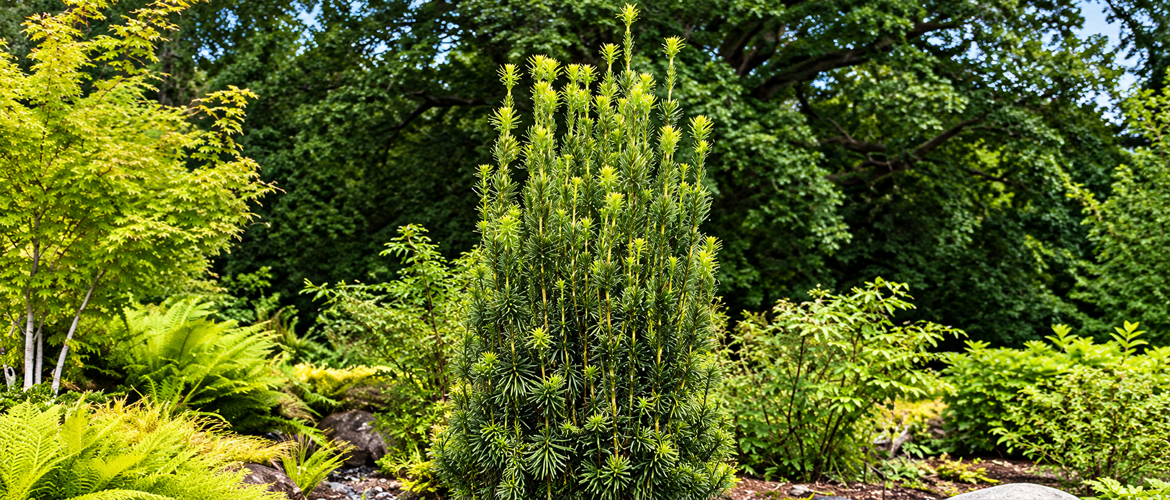
Cephalotaxus harringtonia ‘Fastigiata’: An Evergreen for Shade and Structure
Upright Japanese Plum Yew (Cephalotaxus harringtonia ‘Fastigiata’) is a versatile evergreen for residential landscapes in Long Island, New York. Known for its upright growth, glossy dark-green foliage, and shade tolerance, it offers year-round structure in challenging garden conditions. Louis Contino Landscaping in Oyster Bay recommends this plant for homeowners seeking an elegant evergreen for shaded areas and properties affected by deer browsing.
Appearance and Mature Size
‘Fastigiata’ features an upright, columnar growth habit that adds vertical interest to landscape designs. Its fine-textured, glossy green foliage creates a refined appearance, making it an attractive alternative to many narrow evergreens that struggle in shade.
The plant commonly reaches approximately 6–10 feet tall and 2–4 feet wide, depending on growing conditions and pruning. It is generally listed as suitable for USDA Zones 6–9. Light shaping can help maintain its narrow form as it matures.
Light Requirements and Shade Tolerance
One of the plant’s main advantages is its ability to grow in filtered sunlight and partial shade. It is particularly useful in locations where traditional screening evergreens may struggle.
Suitable planting locations include north-facing foundations, shaded side yards, areas beneath established oak and maple trees, driveway edges, and courtyards with limited sunlight. Choosing shade-tolerant plants can help create a stable landscape without frequent replacements.
Deer Resistance
Deer browsing is a common challenge across Nassau and Suffolk counties. Although no plant is completely deer-proof, Upright Japanese Plum Yew is generally considered deer resistant.
Louis Contino Landscaping uses it as part of layered planting designs, combining evergreen structure with suitable hollies, inkberries, selected boxwoods, and deer-resistant perennials according to site conditions.
Soil, Drainage, and Watering
Although this plant tolerates shade, persistently wet soil and poor drainage can cause root problems. Planting beds should contain suitable organic matter and have adequate drainage. Avoid low areas where water collects after rainfall.
Apply approximately 2–3 inches of mulch while keeping it away from stems. During establishment, provide deep watering and allow the soil to dry slightly between watering sessions. Compacted soil and roof runoff should also be addressed before planting.
Spacing and Pruning
Spacing depends on whether the plant will be used as an individual architectural feature or a soft evergreen screen. For maintained plants approximately 2–4 feet wide, allow sufficient room for airflow and mature growth.
Light pruning helps maintain a crisp columnar appearance, while natural growth requires minimal intervention. Heavier corrective pruning is generally best performed in late winter or early spring before new growth begins.
Landscape Design Applications
Upright Japanese Plum Yew works well in several residential settings:
Foundation planting: Frame entryways, accentuate house corners, and add height between windows.
Privacy screening: Introduce vertical greenery in narrow, shaded side yards.
Formal groupings: Repeat plants at intervals to create a balanced architectural pattern.
Containers: Add evergreen structure near entrances and patios when drainage and winter conditions are properly managed.
Pairing plum yews with hydrangeas, ferns, hellebores, and shade-loving perennials creates contrasting textures and seasonal interest.
Maintenance and Safety
Once established, plum yews are relatively low maintenance. Appropriate watering, mulch, and soil preparation help support healthy growth. However, ‘Fastigiata’ is not a fast-growing privacy plant, so faster-growing companion plants may be useful when immediate screening is required.
Safety is also important. Cephalotaxus harringtonia has documented poison characteristics, so homeowners with pets or young children should consider planting locations carefully. Consult a veterinarian if a pet may have ingested the plant.
Conclusion
Upright Japanese Plum Yew offers an attractive combination of shade tolerance, vertical structure, and relatively good deer resistance. With appropriate spacing, drainage, and maintenance, it can enhance shaded foundations, narrow side yards, and formal landscape designs. Louis Contino Landscaping uses this versatile evergreen to create residential landscapes that remain structured and visually appealing throughout the year.