
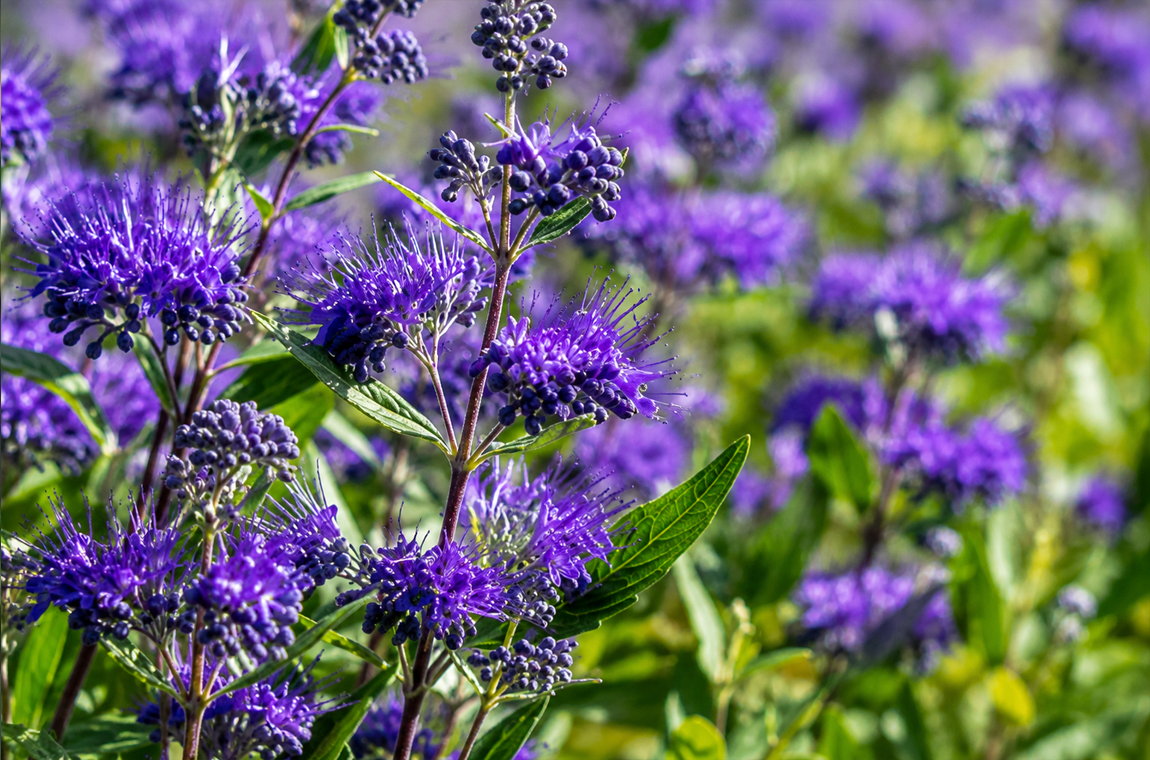
Caryopteris ‘Dark Knight’
Caryopteris ‘Dark Knight’ (often called Bluebeard, Blue Mist, or Blue Spirea) is one of the most eye catching and low maintenance shrubs you can add to your garden — especially if you are looking for strong late season color, pollinator appeal, and deer resistance.
In this full length blog, we’ll explore everything from the plant’s history and characteristics, to deep dive care tips, landscape design ideas, seasonal maintenance, and much more — all at a detailed 2000 word level that’s perfect for gardeners, landscapers, and plant lovers alike.
Introduction: What Makes ‘Dark Knight’ Stand Out
Caryopteris × clandonensis ‘Dark Knight’ is a deciduous, aromatic shrub prized in landscapes for its vibrant deep blue purple flowers, long blooming period, and silver green foliage. It’s not only beautiful, but also incredibly functional — attracting butterflies, bees, and hummingbirds while remaining largely unattractive to deer and other herbivores.
This combination of features makes it a top choice for gardeners who want low maintenance color and wildlife benefits without the frustration of plants constantly being damaged by local critters.
Botanical Profile: Deep Dive into Caryopteris ‘Dark Knight’
Scientific Name & Classification
• Botanical Name: Caryopteris × clandonensis ‘Dark Knight’
• Common Names: Bluebeard, Blue Mist Shrub, Blue Spirea
• Plant Family: Lamiaceae (same family as sages and mint)
• Hardiness Zones: Generally USDA Zones 5–9 — meaning it can survive winter cold in many regions while enthusiastically blooming in summer and fall.
Size & Growth Habit
• Mature Height: ~2–3 feet tall
• Spread: ~2–4 feet wide depending on pruning and site conditions
• Habit: Rounded, mound shaped shrub with many airy stems
This size makes Dark Knight versatile: it can sit in the middle of borders, brighten perennial beds, or provide structure in pollinator gardens.
Flowers & Foliage
• Flower Color: Deep blue purple — one of the darkest and most vibrant shades available in the Caryopteris group.
• Bloom Time: Late summer through early fall — a time when many other perennials are winding down.
• Foliage: Gray green, slightly aromatic leaves that add texture and contrast in the garden.
The flowers are arranged in loose clusters along the branches, creating a soft “cloud” of color that fills the late season garden. The deep blue flowers look especially striking next to more saturated warm colored blooms like asters or sedums.
Built In Defense: Deer & Wildlife Resistance
One of the most talked about features of Caryopteris ‘Dark Knight’ is its deer resistance. While no plant is 100% deer proof in every location, the aromatic foliage and slightly bitter compounds make it unattractive to deer and rabbits in most gardens.
This is a huge advantage for gardeners in suburban or rural areas where deer browsing can devastate flower beds and borders. Deer often avoid aromatic or fuzzy leaved plants — a trait shared with sages, lavenders, and many drought tolerant ornamentals. ‘Dark Knight’ fits beautifully into this category, combining attractive blooms with foliage that doesn’t get nibbled on.
Pollinator Magnet: Why Bees & Butterflies Love It
Beyond being deer resistant, ‘Dark Knight’ is a pollinator magnet. The clusters of flowers produce abundant nectar that draws:
• Bees
• Butterflies
• Hummingbirds (occasionally)
This makes it perfect for pollinator friendly or wildlife gardens where the goal is to support biodiversity while enjoying beautiful blooms.
Gardeners often remark that the flowers buzz with activity throughout late summer and fall — a real sign that your garden is supporting local ecosystems.
Planting Guide: Getting Off to a Strong Start
Choosing the Perfect Spot
• Light: Dark Knight thrives in full sun (at least 6–8 hours per day). Adequate sunlight ensures the best blooming and compact habit.
• Soil: Well drained soil is essential. Excess moisture around the roots can reduce plant vigor and lifespan — these plants prefer moderate to slightly dry conditions.
Spacing
For best results, space plants about 24–36 inches apart. This gives them room to grow into their natural mound shape and allows good air circulation, reducing disease issues.
Best Time to Plant
Plant Dark Knight in spring or early summer so roots establish before the hottest and coldest parts of the year. With adequate moisture, the plant will root in quickly and prepare for its long blooming season.
Watering & Soil Care
• Establishment: Water regularly until the plant is well established — usually the first season.
• After Establishment: Dark Knight becomes moderately drought tolerant and only needs water during prolonged dry spells.
• Soil Moisture: Average to slightly dry — too much moisture can lead to weak stems or root issues.
Burying roots in rich, organic soil helps with early growth, but once established, these plants handle leaner soil conditions well.
Pruning & Seasonal Maintenance
One of the secrets to a lush, productive Caryopteris ‘Dark Knight’ is annual pruning.
Spring Pruning
Because Dark Knight flowers on new growth, it benefits from being cut back hard in early spring — right when new leaves begin to emerge. This encourages a fuller, more compact plant with more flowers later in the season.
A good rule of thumb is to cut the plant back by at least half, or even down to about 6–12 inches from ground level if needed.
Fall & Winter
After flowering, deadheading (removing spent blooms) is optional but can tidy the plant and prevent self seeding. In colder climates, the stems may die back to the ground in winter — that’s normal and part of the plant’s life cycle.
Design & Landscaping Ideas
This shrub’s striking color and texture make it exceptionally versatile. Here are a few ideas for integrating Dark Knight into your landscape.
1. Pollinator Border
Combine with asters, rudbeckias, and goldenrods for a late season pollinator corridor. The deep blue tones of Dark Knight contrast beautifully with warm autumn hues.
2. Xeriscape & Low Water Gardens
Pair with drought tolerant plants like lavender, Russian sage, and catmint for a water wise garden that still provides summer–fall color.
3. Mixed Shrub Borders
Plant alongside ornamental grasses or hydrangeas to balance soft textures with bold color that emerges later in the season.
4. Container Combinations
Though typically planted in the ground, Dark Knight also works in large containers — especially as a centerpiece “thriller” plant surrounded by trailing and filler annuals.
Troubleshooting: Common Issues & Solutions
Even this resilient shrub can run into issues if conditions are far from ideal.
Leggy Growth
Too little sun can result in weak, stretched stems. Ensure plenty of direct sunlight for compact form and abundant blooms.
Root Rot
Poor drainage is the enemy. If soil stays soggy in winter, consider amending with grit or planting in raised beds.
Winter Die Back
It’s normal for stems to die back in cold climates. Pruning in early spring encourages fresh, vigorous regrowth.
Where ‘Dark Knight’ Fits Into Garden Ecosystems
Because of its extended bloom period and robust nectar production, Caryopteris ‘Dark Knight’ plays a valuable role in supporting pollinators when fewer flowers are available. In many regions, late summer and early fall are critical times for bees and butterflies to build energy reserves before winter — and the dark blue flowers of Dark Knight help fill that gap.
Conclusion: Is Caryopteris ‘Dark Knight’ Right for Your Garden?
If you’re looking for a perennial or shrub that:
• Provides rich blue purple flowers late into the season
• Is largely deer resistant
• Attracts pollinators like bees and butterflies
• Thrives in full sun with low maintenance needs
then Caryopteris ‘Dark Knight’ is absolutely worth considering. Its visual appeal combined with functional benefits make it a garden favorite for borders, xeriscapes, pollinator plantings, and even containers alike — particularly in USDA zones 5 through 9.