
Camellias
The Beauty of Camellias: April Dawn, Pink A Boo & Spring’s Promise Ice Angels Camellias are some of the most cherished evergreen shrubs in ornamental gardening — prized for their glossy foliage, abundant blooms, and graceful presence in landscapes from shaded borders to patio containers. With thousands of cultivars across the Camellia japonica and Camellia sasanqua groups, there’s a camellia to suit nearly every garden.
In this blog, we’ll delve deep into three unique and beautiful camellias: ‘April Dawn’, ‘Pink A Boo’, and ‘Spring’s Promise’ Ice Angels™ — exploring their characteristics, planting tips, design ideas, and what makes them so special in gardens around the world.
What Makes Camellias Special?
Camellias are evergreen shrubs native to eastern and southern Asia, especially China and Japan. They belong to the Theaceae (tea) family and have been cultivated for centuries for their elegant, long lasting blooms. The genus includes thousands of named cultivars, especially within Camellia japonica and Camellia sasanqua, each bred for distinctive flower colors, forms, and garden performance.
Camellias generally bloom from late fall through spring, offering color during times when many other plants are dormant — making them a cherished component of winter and spring gardens.
1. Camellia japonica ‘April Dawn’
Overview & Character
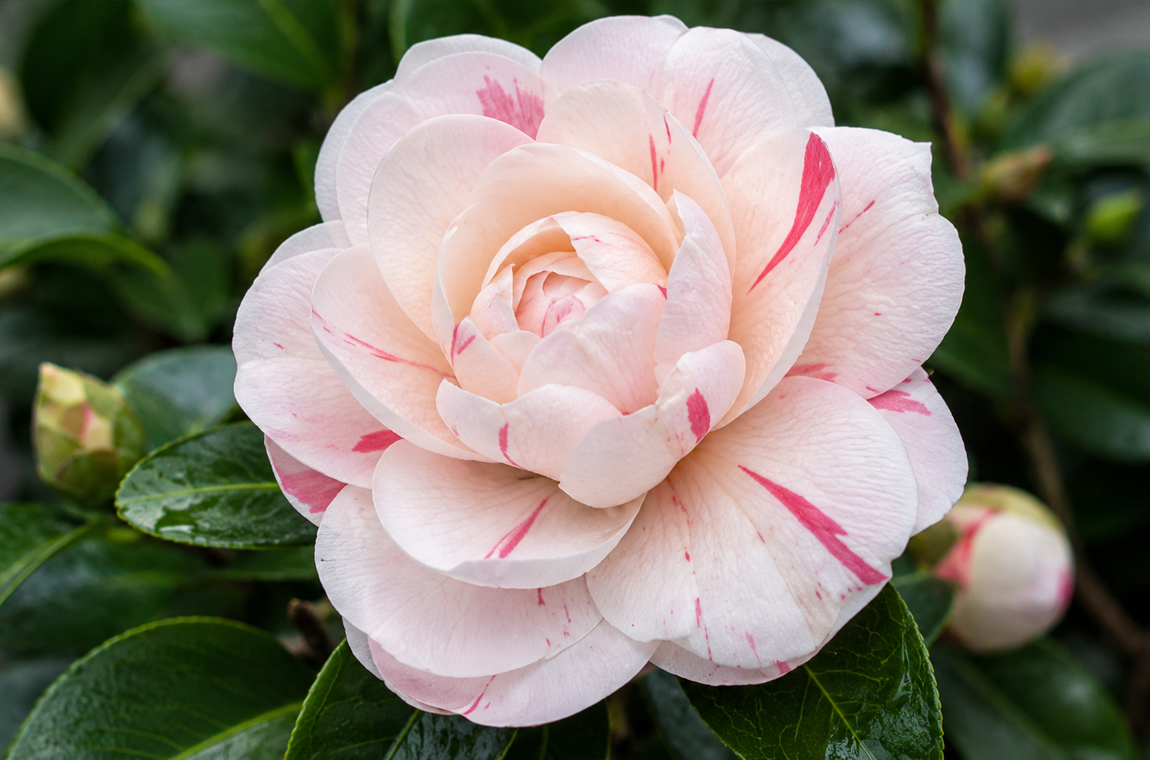
Camellia japonica ‘April Dawn’ is a standout cultivar known for its formal double flowers in soft white with blush pink streaks — a delicate and romantic combination.
• Flower: Formal double blooms, white with rosy pink highlights
• Bloom Season: Late winter to early spring
• Foliage: Glossy deep green, evergreen
• Height/Spread: Typically 6–10 ft tall and 3–5 ft wide in mature gardens
• Zones: USDA 6–9 (cold hardy)
Why You’ll Love ‘April Dawn’
‘April Dawn’ is part of the “April Series” of camellias bred for enhanced cold tolerance — extending the range where gardeners can enjoy camellias outdoors. It’s appreciated for:
Elegant, multi colored blooms that contrast beautifully against glossy evergreen leaves. Winter to spring color, typical of Camellia japonica, offering months of floral enjoyment before many trees leaf out.
Versatility — great in borders, containers, or as a stand alone specimen.
Gardeners value ‘April Dawn’ for its refined color palette — especially in shaded or woodland gardens where its soft pastel hues bring gentle brightness to the landscape.
Planting & Care Tips
To help your ‘April Dawn’ thrive:
• Soil: Rich, well draining, slightly acidic soil
• Light: Partial shade to morning sun (afternoon shade in hot regions)
• Water: Keep soil evenly moist, but not waterlogged
• Mulch: Apply a layer around the base (but not against the trunk) to preserve cool root conditions
Light pruning after bloom can help maintain shape and encourage fresh flower buds next season.
Design Ideas
‘April Dawn’ works beautifully in:
• Shaded foundation plantings alongside rhododendrons and ferns
• Woodland garden borders
• Mixed evergreen hedges with variegated foliage plants
Its graceful blooms add a serene, classic look to cottage gardens, formal landscapes, and urban greenspaces alike.
2. Camellia sasanqua ‘Pink A Boo’
Overview & Character
The charming Camellia sasanqua ‘Pink A Boo’ (Camellia sasanqua ‘Mondel’ PP #21,687) is a fragrant and lively shrub with bubblegum pink flowers and bright yellow centers.
• Flower: Pink single blooms with golden stamens; fragrant
• Bloom Season: Fall to winter (often one of the earliest camellias to bloom)
• Foliage: Glossy evergreen leaves
• Height/Spread: Can reach up to ~8–10 ft tall and wide
• Zones: USDA 7–10 (warmer gardeners will see best performance)
Why ‘Pink A Boo’ Stands Out
‘Pink A Boo’ is beloved for:
Fragrant blooms — a delightful trait not always seen in camellias. (Monrovia)
Early bloom season — bringing cheerful pink flowers to gardens when many plants are dormant.
Large flowers and eye catching contrast — vibrant pink petals against rich green foliage.
This cultivar originated as a sport (natural variation) of the popular Camellia sasanqua ‘Yuletide’, selected for its larger, fragrant blooms.
Care & Cultivation
Pink A Boo behaves much like other Camellia sasanqua:
• Light: Enjoys filtered to partial shade — perfect under trees or beside structures that offer soft light
• Soil: Acidic, moist but well drained
• Water: Regular watering helps establish a strong root system
• Pruning: After flowering, light shaping is best
It also makes an excellent hedge or screen plant due to its dense evergreen habit.
Garden Style Ideas
• Use as a winter focal point, especially in woodland borders
• Grow in a container near patios to appreciate fragrance up close
• Pair with early winter bulbs and evergreen shrubs for layered seasonal interest
With its winter blooming flowers and captivating scent, ‘Pink A Boo’ brings joy to gardens when little else is in bloom.
3. Camellia japonica ‘Spring’s Promise’ Ice Angels™
Overview & Character
‘Spring’s Promise’, often marketed under the Ice Angels™ series, is bred for both beauty and improved cold hardiness — extending the traditional range of Japanese camellias farther north than usual.
• Flower: Rose colored blooms with contrasting golden stamens
• Bloom Season: Mid to late winter into early spring
• Foliage: Glossy evergreen
• Height/Spread: 6–8 ft or more
• Zones: USDA 6–10 (excellent cold tolerance for a shy camellia)
Special Features & Attributes
‘Spring’s Promise’ offers:
Vivid rosy blooms — rich colors perfect for brightening late winter landscapes.
Cold hardiness — capable of growing where many other Japanese camellias struggle.
Versatility — great as a specimen plant, hedge, or border accent.
Unlike formal double camellias, its blooms are more open and single to semi double, showcasing a natural, classic camellia look.
Cultivation & Care
Provide conditions similar to other camellias:
• Soil: Acidic, organic, well drained
• Light: Filtered sun to partial shade
• Water: Consistent moisture during establishment; reduce once established
• Mulch: Helps keep roots cool and retain moisture
‘Spring’s Promise’ also pairs beautifully with companion plants like Japanese maples, azaleas, and ferns that thrive in similar acidic, sheltered environments.
Design Inspiration
• Foundation plantings — lush backdrop for early spring bulbs
• Mixed borders — near shade trees or woodland garden edges
• Containers — larger patio pots for winter patio interest
This camellia truly earns its name — bringing the first promise of spring after long, cold months. Its blooms signal that warmer days (and gardens full of life) are ahead.
Planting & Growing Camellias: Universal Tips
While specific care needs vary slightly between cultivars, most camellias share these core principles:
Light
Camellias typically prefer partial shade — bright, indirect sunlight is ideal. Too much direct afternoon sun can scorch leaves and fade petals. In warmer climates, dappled shade beneath trees or near structures offers perfect conditions.
Soil
These shrubs thrive in acidic (pH 5.5–6.5), well drained soil amended with organic matter. Mulch with pine needles or shredded bark to maintain acidity and protect roots from temperature extremes.
Watering
Keep the balance — even moisture without waterlogging. Newly planted camellias benefit from regular watering until established; then they’re more drought tolerant.
Timing & Fertilizing
• Plant in spring or fall for best root development
• Feed with a fertilizer formulated for acid loving plants after bloom
Winter Protection
Hardy cultivars like those in the April Series or Ice Angels™ can tolerate colder zones, but young plants in exposed sites may benefit from burlap wind screens or mulch insulation.
Landscape & Design Ideas
Camellias shine in elegant, layered plantings:
Woodland Gardens
Under tall trees with azaleas, ferns, and hellebores for seasonal rhythm.
Foundation Plantings
Near patios or entryways for year round structure and seasonal bloom.
Containers
On patios or terraces with complementary shrubs for winter color.
Hedge & Screening
Dense evergreen foliage creates privacy with ornamental interest.
In colder zones, surround camellias with hardy companion plants like boxwood or shade tolerant perennials to balance winter interest and texture.
Wrapping Up: Camellias for Every Garden
Whether you’re drawn to the soft elegance of ‘April Dawn’, the cheerful winter blossoms of ‘Pink A Boo’, or the hardy brilliance of ‘Spring’s Promise’ Ice Angels™, there’s a camellia to enrich your landscape. These shrubs offer not only stunning flowers but also evergreen structure and seasonal drama.
Camellias are truly garden investments — their beauty lasts for years, rewarding thoughtful planting and care with reliable, breathtaking blooms each season.