
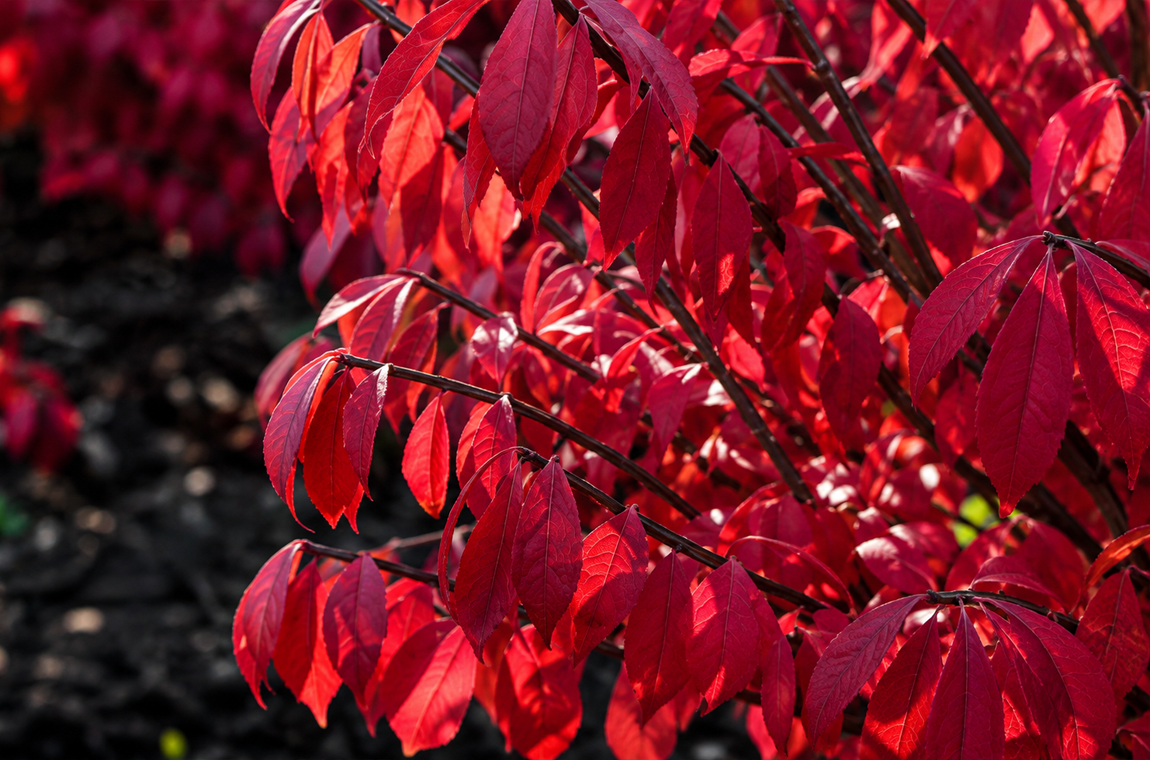
Burning Bush
Few shrubs in the garden world deliver as dramatic a seasonal transformation as the Burning Bush (Euonymus alatus). This deciduous shrub has long been a go to choice for homeowners and landscape designers seeking eye catching fall color, reliable performance, and low maintenance beauty from spring through winter. When autumn arrives, green summer foliage transforms into a fiery red blaze that seems to set the garden aflame — hence the common name “Burning Bush.”
What Is Burning Bush?
The Burning Bush (Euonymus alatus) is a deciduous shrub native to parts of Asia — especially China, Japan, and Korea — and is grown for its seasonal foliage and ornamental bark.
Key Features
• Summer foliage: Medium green leaves that provide rich texture in warm months.
• Fall display: Outstanding scarlet red foliage that can last many weeks and becomes a focal point in garden beds.
• Winter interest: Even in winter, the plant’s signature winged twigs — corky ridges on the branches — lend architectural interest to the landscape.
• Fall fruit: Small reddish fruits may appear that attract birds.
Although its flowers in spring are rather small and unremarkable, it’s the foliage transformation and overall structure that make this shrub an unforgettable presence in a garden.
Deer Resistance: Does Burning Bush Stand Up to Browsing?
One of the reasons Burning Bush has been widely planted in residential landscapes is that it’s often listed as deer resistant. Deer resistant plants are those that deer tend to avoid — usually because of leaf texture, taste, or smell — but no plant is completely deer proof.
What Deer Resistance Really Means
Burning Bush is generally considered unappealing to deer due to its woodiness and leaf texture.
However, hungry deer — especially in winter — may still nibble on bark or foliage when other food is scarce.
So while it often escapes heavy browsing better than tender perennials or soft leaf shrubs, if you have a very high deer population, some deterrents (like fencing or repellents) might still be helpful.
Burning Bush in the Landscape: Uses & Benefits
Burning Bush is versatile and impactful in garden design. Here are some of the ways you can use it:
As a Focal Point
Planted singularly — especially near entryways or as a specimen — Burning Bush brings seasonal drama and depth to a garden. The red foliage draws the eye like a living sculpture.
Hedge or Screen
When planted in groups, these shrubs can form a dense hedge or privacy screen that changes visually throughout the year.
Foundation Planting
In foundation beds, Burning Bush offers solid summer green texture followed by standout fall color that complements architectural elements.
Interest Across Seasons
Even without leaves, the ridged corky bark provides winter visual interest. Many gardeners love how the bare stems create unique shadow and form in colder months.
Typical Growth & Care
Light Requirements
Burning Bush performs best in full sun to part shade — the more sun, the brighter the autumn color.
Soil & Water
It adapts to a wide range of soils as long as they’re well drained. Once established, it’s fairly drought tolerant and doesn’t require much supplemental watering.
Pruning & Maintenance
This shrub is naturally rounded and dense, so pruning is optional. If you wish to shape it or reduce its size, prune in late winter or early spring before new growth emerges.
Hardiness
Hardy in many climates (typically USDA Zones 4–8), it’s versatile across a wide range of landscapes.
Caution: Invasiveness and Ecology
While Burning Bush remains popular for its ornamental traits, it’s important to know that many forms of Euonymus alatus are considered invasive in large parts of North America. Birds eat the berries and disperse seeds, allowing the plant to spread into woodlands and natural areas, where it can displace native species.
This has led some states to ban or restrict its sale entirely. Research your local guidelines and consider local alternatives if environmental impact is a concern.
Example alternatives might include native shrubs with vibrant fall color, such as viburnums or dogwoods — but this blog focuses here on Burning Bush itself, its care, and landscape uses.
Dwarf Burning Bush: All the Color in a Smaller Package
For gardeners who love the look of Burning Bush but want smaller plants that fit tighter spaces, there are several dwarf or compact cultivars available.
What Makes a Dwarf Burning Bush Different?
The words dwarf or compact generally mean the plant will grow to a smaller size than the standard Burning Bush, making it suitable for smaller yards, foundation plantings, borders, and even container gardens.
However, “dwarf” can be a bit misleading:
• Some dwarf varieties still reach several feet tall and wide, just less than the large landscape forms.
• Others are very compact, staying closer to 3–5 feet in height.
Common dwarf types include:
• ‘Compactus’ / Dwarf Winged Burning Bush – Often grows 8–10+ feet in ideal conditions but with a more compact spread.
• Truly dwarf forms like ‘Rudy Haag’ or ‘Pipsqueak’ – Maturing to around 3–5 feet tall and wide.
• ‘Little Moses’ – Extra compact, great for very small gardens or containers with brilliant fall color.
What They Share With Standard Burning Bush
All retain the fire red fall foliage that gives Burning Bush its iconic appeal.
Many are similarly adaptable to a range of soils and conditions.
They still provide the same seasonal structure and winter bark interest.
Caring for Dwarf Burning Bush
Sun & Soil
Plant dwarf Burning Bush in a sunny location for the best fall color. Most will also tolerate part shade. Well drained soil is ideal; these shrubs don’t like sitting in water.
Watering
Establishing plants need regular watering the first season; once established, they’re quite drought tolerant.
Pruning
Because many varieties remain compact, pruning may not be necessary unless you want to control shape. If you do prune, do so in late winter or early spring before new growth starts.
Landscape Uses
• Foundation shrubbery
• Small garden accents
• Container plantings
• Low hedges
• Mixed borders
Their manageable size and splashy autumn hues make dwarf Burning Bushes ideal for small to medium garden spaces where a full sized shrub would overwhelm.
Design Inspiration: Burning Bush in the Garden
Here are some ways to use both standard and dwarf Burning Bush in landscape design:
Autumn Feature Plant
Position the shrub as a focal point in garden beds to draw attention in fall. Pair it with evergreens (like boxwoods) for contrast.
Informal Privacy Screen
Plant several in a row for a living screen that anchors property lines and provides texture year round.
Mix With Perennials
Combine with grasses, sedums, or asters for layered autumn color that transitions beautifully through the seasons.
Container Pop
Use dwarf varieties in large containers on patios or entryways — their intense fall color makes a bold seasonal statement.
Final Thoughts
The Burning Bush and its dwarf cultivars remain beloved in landscapes for their spectacular fall color, adaptability, and low care needs. While no plant is entirely deer proof, Burning Bush shrubs are generally unappealing to deer browsing, making them a good choice where deer are common.
That said, because many Burning Bush forms can spread beyond cultivated borders and are considered invasive in some regions, you should always check local planting guidelines and consider ecological impacts when planning your garden.
Whether you’re drawn to the classic bold color of the full sized shrub or the versatile charm of a dwarf variant, Burning Bush — when used thoughtfully — will add vibrant, seasonal personality to your outdoor spaces for years to come.