
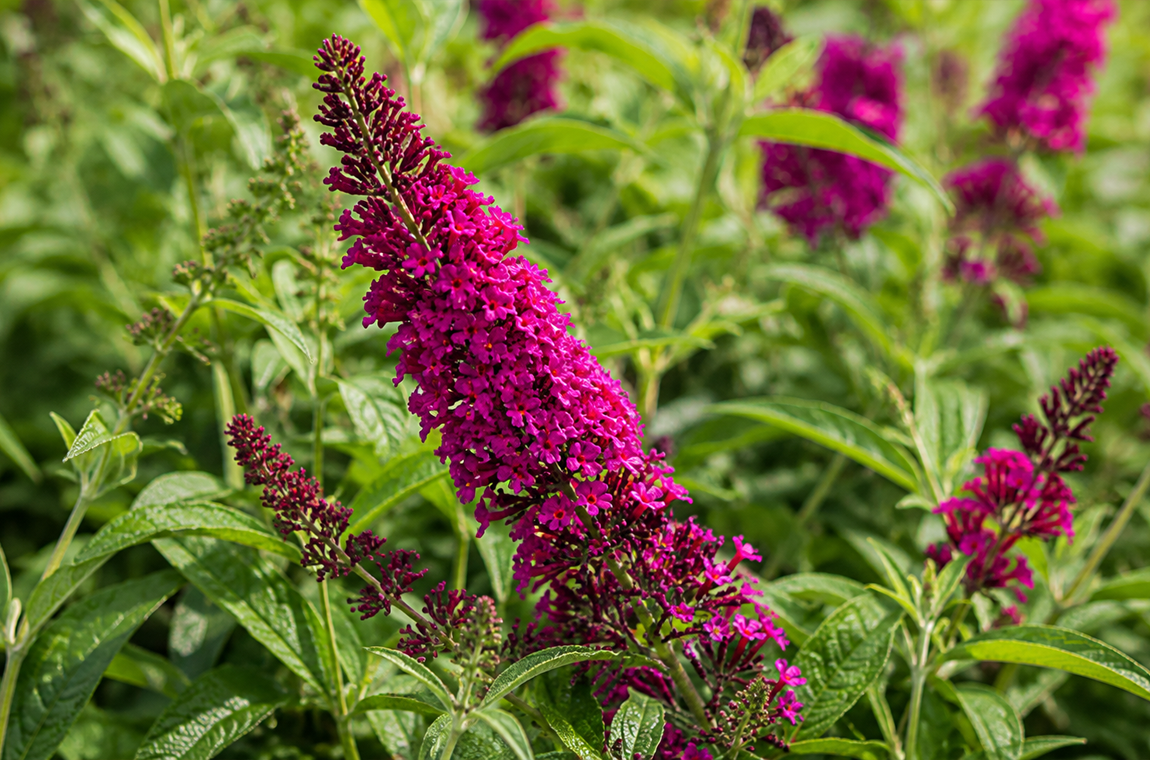
Buddleia
What Is Buddleia? There’s a reason Buddleia — commonly called butterfly bush — has become one of the most cherished garden shrubs: it combines dazzling blooms, continuous summer color, fragrance, and an ability to draw in pollinators like butterflies, bees, and hummingbirds. These plants are beloved by gardeners both for their ornamental value and for their role in supporting garden wildlife.
What Is Buddleia?
Buddleia is a genus of flowering shrubs native to Asia, Africa, and the Americas, with Buddleia davidii being the most widely cultivated species in gardens around the world. They’re prized for their long panicles (spike like clusters) of flowers in a range of colors — vivid purples, pinks, whites, reds, and blues — and their extended bloom season that can last from early summer through the first frost.
The common name “butterfly bush” comes from the plant’s remarkable ability to attract butterflies and other pollinators with its rich nectar and fragrant blooms. This makes Buddleia a staple in pollinator gardens and wildlife friendly landscapes.
Despite their charm, traditional Buddleia varieties have sometimes been criticized for being invasive in certain regions because of abundant seed production. Newer cultivars like the ones we’ll cover here are often bred to be less invasive and more manageable in modern gardens.
Buddleia ‘Miss Molly’: The Ruby Pink Star
Profile
• Common Name: Butterfly bush ‘Miss Molly’
• Botanical Name: Buddleia ‘Miss Molly’
• Color: Deep ruby pink flowers
• Height: 4–5 ft (1.2–1.5 m)
• Sun Exposure: Full sun
• Zones: USDA 5–9
• Bloom Time: Mid summer to fall
• Attracts: Butterflies, hummingbirds, bees
Why Grow ‘Miss Molly’?
‘Miss Molly’ is celebrated as one of the most strikingly colored butterfly bushes, with vivid ruby pink blooms that stand out in borders, cottage gardens, or mixed perennial beds. The flowers are fragrant and abundant — offering months of color without the need for constant attention.
Because this variety blooms on new wood, it responds well to spring pruning, which can help to encourage fuller, more vigorous growth. Like other Proven Winners® cultivars, it’s selected for strong performance and bloom reliability in many climates.
Plus, it’s relatively non invasive compared to older butterfly bush types — meaning you can enjoy its color without worrying (as much) about it taking over your garden.
The Pugster® Series: Compact Buddleia With Big Blooms
Plants in the Pugster series are among the most popular Buddleia cultivars today. They stand out because they deliver full size flowers on compact shrubs — perfect for smaller gardens, containers, edging plants, or intensively planted borders.
Buddleia Pugster Blue®
Buddleia Pugster Blue — a compact butterfly bush with true blue blooms.
Images: various views of Pugster Blue in bloom.
Profile at a Glance:
• Color: True blue with tiny yellow orange centers
• Height & Width: About 2–3 ft (60–90 cm)
• Bloom Time: Early summer to frost
• Sun: Full sun
• Zones: USDA 5–9
• Features: Fragrant flowers, drought tolerant, attractive to butterflies
• Uses: Small gardens, containers, mass plantings, borders
Pugster Blue packs a huge floral punch despite its small stature. The fragrant blue flower spikes are eye catching and provide constant color throughout the growing season without needing repeated deadheading.
Its compact size makes it ideal for containers and patio plantings, and because it continues to bloom even in cool weather, it’s a gardener’s favorite for extending vibrant displays late into fall.
Buddleia Pugster Pink
Quick Facts:
• Color: Bright pink with orange eye
• Size: ~2 ft tall & wide
• Blooming: Summer through fall
• Sun: Full sun
• Great For: Small gardens, borders, containers
Pugster Pink brings a splash of vibrant pink to garden beds where space is limited but color is essential. Like its blue counterpart, it blooms continuously through the season, making it a reliable performer for gardeners looking for low maintenance color.
Because it’s compact and tidy, this cultivar works beautifully in mixed borders with perennials and annuals — adding vertical interest with its upright, flower packed spikes.
Buddleia Pugster White®
Standout Features:
• Color: Pure white flowers
• Form: Compact, mounded
• Zones: USDA 5–9
• Care: Full sun, well drained soil
• Benefits: Drought tolerant, pollinator friendly
Pugster White offers a softer, elegant alternative to the stronger colors of its series siblings. Its pure white flower spikes are perfect for moon gardens, neutral color schemes, or as a backdrop to brighter foliage.
Like other Pugster varieties, it thrives in sunny locations with well drained soil and delivers a long season of bloom with minimal effort. Deadheading spent flowers encourages more blooms and helps keep the plant tidy.
Growing Buddleia: Care & Tips for Success
Buddleia is widely loved because its care is fairly straightforward — but a few best practices help you get the most out of these shrubs:
Light & Soil
• Plant Buddleia in full sun (at least 6 hours of direct sunlight).
• They prefer well drained soil and can tolerate dry conditions once established.
Watering
• Water regularly until established; after that, Buddleia is fairly drought tolerant.
• Avoid overly wet conditions, which can lead to root rot.
Pruning
• Most Buddleia bloom on new wood, so a spring pruning encourages vigorous growth and abundant flowers.
• Remove dead stems and reduce size as needed for shape.
Attracting Wildlife
• These shrubs are magnets for butterflies, hummingbirds, and bees — all of which are drawn to the rich nectar.
Continuous Bloom
• Deadhead old blooms throughout the season to encourage more flowers and reduce self seeding.
Design Ideas With Buddleia
Whether you’re planting in a small urban garden, a sprawling yard, or containers on a balcony, Buddleia works beautifully in:
• Pollinator gardens
• Cottage garden borders
• Mixed perennial beds
• Containers & patio pots
• Mass plantings for color impact
Pair them with grasses, coneflowers, salvia, or ornamental grasses for a mixed palette of texture and long season interest.
Final Thoughts
From the dramatic ruby pink blooms of Miss Molly to the compact powerhouses in the Pugster series — Blue, Pink, and White — Buddleia offers a range of options for every gardener. These shrubs deliver long lasting color, fragrance, and a stage for garden wildlife to flourish.
Just remember thoughtful placement, proper pruning, and regular deadheading will make these beauties a standout feature in your landscape year after year.