
Brunnera ‘Alexander’s Great’: The Ultimate Shade Garden Showstopper
If you’re looking for a plant that delivers dramatic foliage, delicate spring flowers, and effortless elegance in shade, Brunnera macrophylla ‘Alexander’s Great’ is hard to beat. This exceptional perennial has earned its reputation as one of the most striking shade plants available today, especially for Northeast landscapes where partial to full shade can be challenging to design.
At Louis Contino Landscaping, we frequently use Brunnera ‘Alexander’s Great’ in high-end residential projects across Long Island because it checks so many boxes: beauty, reliability, low maintenance, and long-term performance. In this in-depth guide, we’ll explore everything you need to know—from plant characteristics and growing conditions to design ideas and professional installation tips—so you can decide if this standout perennial belongs in your landscape.
What Is Brunnera ‘Alexander’s Great’?
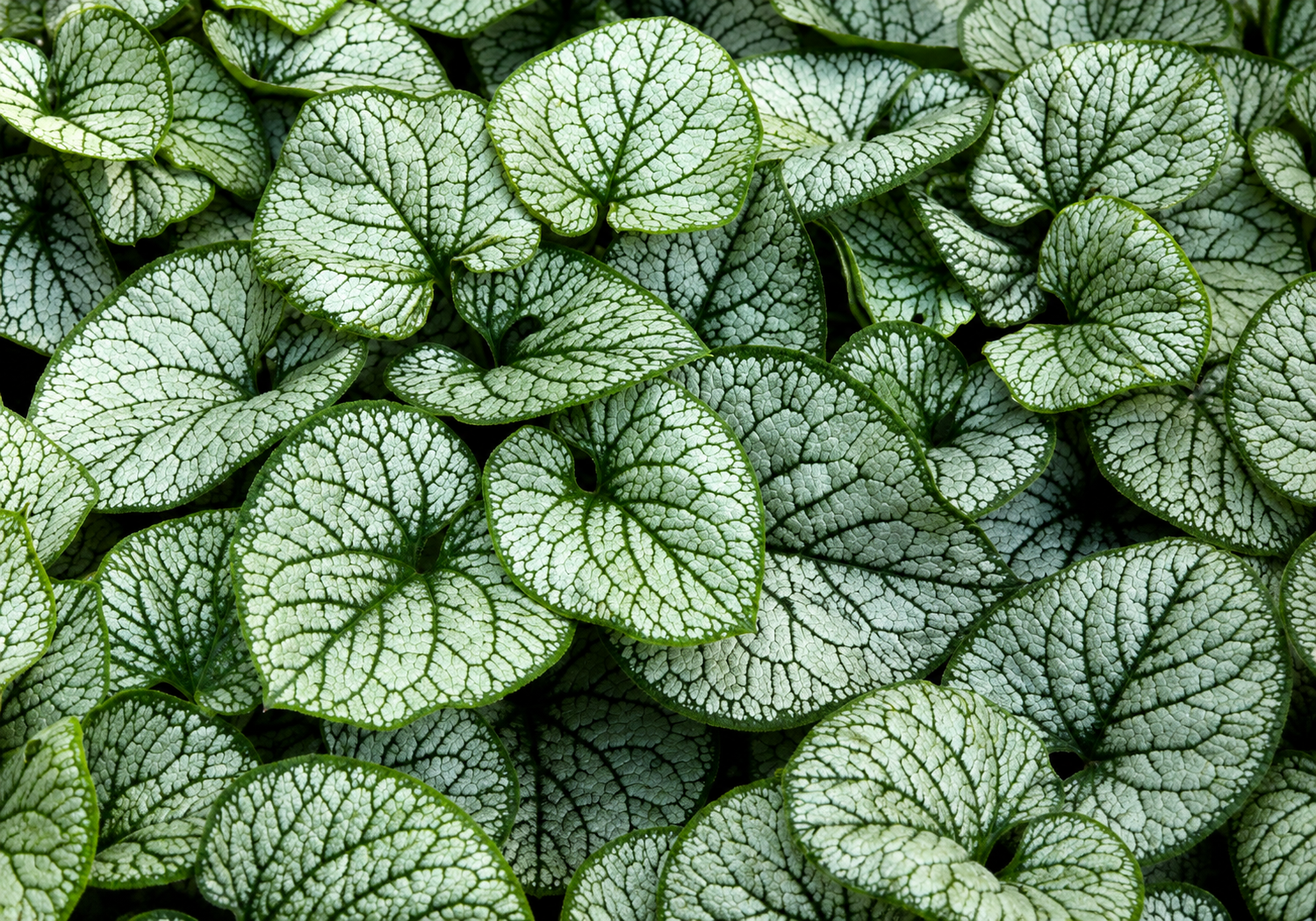
Brunnera ‘Alexander’s Great’ is a large-leaf cultivar of Brunnera macrophylla, commonly known as Siberian bugloss. While traditional Brunnera varieties are loved for their soft blue spring flowers, ‘Alexander’s Great’ takes things to another level with oversized, heart-shaped silver leaves accented by bold green veining.
This cultivar was selected for:
- Exceptional leaf size (much larger than standard Brunnera)
- Strong silver coloration
- Improved vigor and garden presence
It’s a true foliage plant first, with flowers as a graceful bonus.
Key Plant Characteristics
Size & Growth Habit
- Mature height: 14–18 inches
- Mature spread: 24–30 inches
- Growth form: Clumping, mound-forming perennial
This generous spread makes it ideal for groundcover use in shaded areas while still maintaining a refined, upscale look.
Foliage
The leaves are the real star:
- Large, heart-shaped
- Bright silver with dark green veins
- Slightly textured, catching light beautifully in shade
Even in deep shade, the foliage remains luminous, which is why designers love it for dark corners of the landscape.
Flowers
In early to mid-spring, Brunnera ‘Alexander’s Great’ produces:
- Small, sky-blue flowers
- Forget-me-not–like appearance
- Airy clusters held above the foliage
While subtle, the flowers provide an elegant seasonal moment that pairs beautifully with spring bulbs.
Ideal Growing Conditions
Light Requirements
- Best: Partial shade to full shade
- Tolerates: Morning sun with afternoon shade
- Avoid: Hot, direct afternoon sun
Too much sun can scorch the leaves, especially during summer heat waves.
Soil Preferences
- Moist, well-drained soil
- Rich in organic matter
- Slightly acidic to neutral pH
Amending soil with compost at planting time greatly improves performance.
Water Needs
- Moderate, consistent moisture
- Does not like drought
- Excellent choice for areas with irrigation or naturally moist soils
In professionally designed landscapes, we often pair Brunnera with drip irrigation systems to maintain ideal moisture without overwatering.
Why Landscapers Love Brunnera ‘Alexander’s Great’
At Louis Contino Landscaping, we value plants that perform consistently year after year, and Brunnera ‘Alexander’s Great’ delivers.
Standout Benefits
- Long-lasting foliage from spring through fall
- Deer resistant (a major plus on Long Island)
- Low maintenance once established
- Excellent contrast plant in layered designs
- Works beautifully in modern, classic, and naturalistic landscapes
It’s especially effective in woodland gardens, shaded foundation plantings, and under mature trees where turf struggles.
Design Uses in the Landscape
Shade Garden Anchor Plant
Brunnera ‘Alexander’s Great’ works beautifully as a focal foliage plant in shade gardens. Its bold leaves create structure and visual weight, allowing designers to layer finer-textured plants around it.
Understory Planting
This plant thrives beneath deciduous trees, where it receives filtered light and benefits from cooler soil temperatures.
Pathway & Walkway Borders
Used along shaded stone or bluestone walkways, Brunnera softens hard edges while maintaining a clean, polished appearance.
Foundation Planting
For north-facing homes or shaded architectural features, this plant brightens dark areas without competing with the structure.
Best Companion Plants
Brunnera ‘Alexander’s Great’ pairs beautifully with other shade-loving plants. Some of our favorite combinations include:
- Hosta – contrasts in leaf shape and texture
- Heuchera (Coral Bells) – adds color variation
- Ferns – enhances woodland aesthetics
- Astilbe – introduces vertical blooms
- Hellebores – extends seasonal interest
By mixing foliage textures and bloom times, we create landscapes that look intentional and layered—not flat or monotonous.
Seasonal Interest Throughout the Year
Spring
- Blue flowers emerge
- Fresh, bright silver foliage unfurls
- Pairs beautifully with daffodils and tulips
Summer
- Foliage reaches full size
- Acts as a cooling visual element in heat
- Maintains structure when many perennials fade
Fall
- Leaves remain attractive until frost
- Works well with fall-blooming shade plants
Winter
- Herbaceous perennial dies back
- Clean removal in late fall or early spring prepares it for regrowth
Maintenance & Care Tips
One of the biggest advantages of Brunnera ‘Alexander’s Great’ is its low maintenance nature.
Routine Care
- Water during dry spells
- Mulch annually to retain moisture
- Remove damaged leaves as needed
- Cut back spent foliage late fall or early spring
Pest & Disease Resistance
- Highly resistant to deer and rabbits
- Few insect issues
- Occasional leaf scorch only if exposed to excessive sun or drought
This makes it ideal for homeowners who want a refined landscape without constant upkeep.
Brunnera in High-End Landscape Design
In luxury residential landscapes, plants must do more than survive—they must elevate the space. Brunnera ‘Alexander’s Great’ brings a sense of calm, refinement, and intentional design to shaded areas that are often overlooked.
We frequently incorporate it into:
- Estate-scale woodland gardens
- Poolside shade borders
- Courtyard gardens with filtered light
- Transitional spaces between lawn and forest
Its silver foliage reflects light, making shaded areas feel brighter, larger, and more inviting.
Installation Tips from Professionals
When we install Brunnera ‘Alexander’s Great’, we follow a few key principles:
- Proper spacing – Allow room for mature spread
- Soil preparation – Compost and proper grading are essential
- Mulching – Protects roots and maintains moisture
- Grouping – Mass plantings create stronger visual impact
Planting in odd-number groupings (3, 5, or 7) produces a more natural, designer-quality look.
Is Brunnera ‘Alexander’s Great’ Right for Your Property?
This plant is an excellent choice if:
- You have shaded or partially shaded areas
- Deer pressure is a concern
- You want long-lasting foliage interest
- You prefer low-maintenance, professional-looking landscapes
It may not be ideal if:
- Your property is full sun with dry soil
- You prefer bold flowering plants over foliage
- Irrigation is not available in shaded areas
Final Thoughts
Brunnera ‘Alexander’s Great’ is more than just a shade perennial—it’s a design solution. Its bold silver foliage, elegant spring flowers, and dependable performance make it one of the most valuable plants we use at Louis Contino Landscaping.
Whether you’re enhancing a woodland garden, upgrading a shaded foundation bed, or looking for a sophisticated alternative to traditional groundcovers, this plant delivers beauty with minimal effort.
If you’re considering incorporating Brunnera ‘Alexander’s Great’ into your landscape design, working with experienced professionals ensures proper placement, soil preparation, and long-term success. Thoughtful plant selection is what transforms a yard into a landscape—and this plant is a perfect example of that philosophy.