
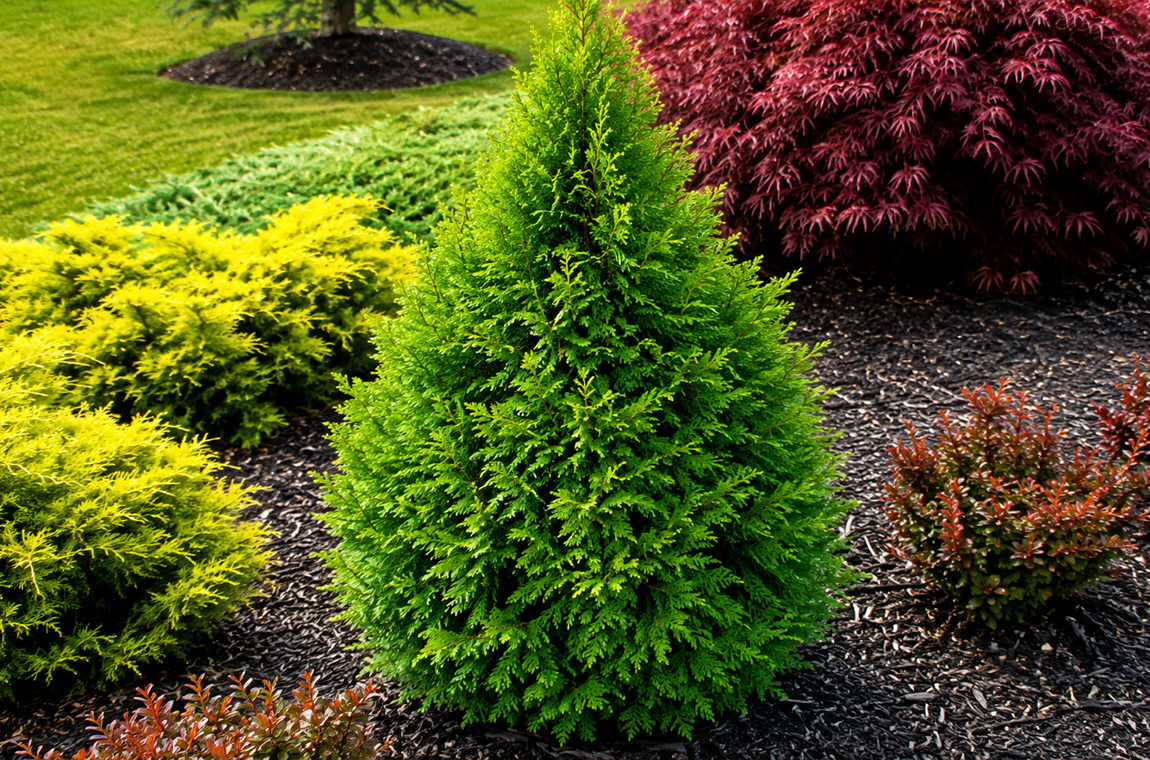
Boxwood (Buxus)
What Are Boxwoods? Boxwoods — Buxus — are a group of evergreen shrubs prized for their dense foliage, subtle texture, and adaptability across landscapes. They’ve been garden staples for centuries due to their ability to:
• Provide year round green color
• Be shaped easily into formal hedges or topiary
• Fit small gardens to grand estates
• Offer low maintenance structure in borders or foundation plantings
Boxwoods have small, glossy leaves that stay attractive in many climates, and most cultivars can handle shearing or shaping, making them popular in both formal and informal gardens.
Different boxwood species and cultivars offer variations in size, shape, hardiness, and texture — from compact edging shrubs to taller hedges or focal plants. Let’s explore four of the most popular and garden worthy boxwood types: Dwarf English, Green Mountain, Green Velvet, and Wintergreen.
Boxwood Basics: Evergreen Structure You Can Shape
Before we dive into the specific varieties, here’s a quick look at what boxwoods are all about:
• Evergreen foliage: Leaves stay on year round, holding color even in winter.
• Pruning tolerance: Boxwoods respond exceptionally well to trimming and shaping.
• Growth rate: Generally slow to moderate; many cultivars are easy to keep compact with light pruning.
• Soil & site: Prefer well drained soil and can grow in full sun to partial shade.
Boxwoods are often used as hedges, borders, topiaries, foundation plantings, accents, or even container plants. Their classic green tones and neat habits anchor designs in both traditional and modern landscapes.
Dwarf English Boxwood (Buxus sempervirens ‘Suffruticosa’)
Overview
Dwarf English Boxwood (Buxus sempervirens ‘Suffruticosa’) is often what people picture when they imagine classic boxwood:
• Size: Typically 1–3 feet tall and wide (varies with pruning).
• Habit: Rounded, dense, and naturally compact — ideal for edging, low hedges, or formal knot gardens.
This cultivar has been favored in formal European gardens for centuries and is still used today wherever neat, refined green structure is desired.
Landscape Use
• Low edging: Great for defining garden beds and paths.
• Formal borders: Works in classic garden designs with symmetry and repeat patterns.
• Topiary & shapes: Tight growth makes it easy to sculpt into spheres or classic shapes.
Growing & Care Notes
• Performs best in well drained soil with regular moisture but not soggy conditions.
• Benefits from light pruning in spring to maintain compact shape.
• Thrives in full sun to partial shade.
Dwarf English Boxwood is a timeless choice if you want classic styling and small stature without overwhelming your landscape.
Green Mountain Boxwood (Buxus ‘Green Mountain’)
Overview
Green Mountain Boxwood is a hybrid variety that’s particularly valued for its:
• Upright, cone like habit: Unlike rounded varieties, Green Mountain naturally grows slightly taller with a tidy silhouette — ideal for backbone plantings.
• Size: Generally 4–5 feet tall and ~3–4 feet wide, although pruning can adjust dimensions.
• Foliage: Dark green leaves that can retain color through winter — sometimes showing bronze tinges in cold sun.
Landscape Uses
• Foundation shrubs: Flank doors or windows with upright form.
• Specimen plants: Stand alone as structural anchors in borders.
• Medium hedges: Provide vertical rhythm without needing heavy shaping.
Green Mountain is a great choice when you want a natural, formal structure without excessive pruning, and its winter hardiness helps it hold color and shape in colder climates.
Green Velvet Boxwood (Buxus ‘Green Velvet’)
Overview
Green Velvet is a popular hybrid between Buxus sempervirens and Buxus microphylla var. koreana, bringing together the best traits of both lineages:
• Compact rounded form: Natural ball shape is perfect for hedges, specimen planting, or mixed borders.
• Size: Typically around 3–4 feet tall and wide without shearing, but easily maintained at smaller sizes with trimming.
• Foliage: Dark green and glossy, it holds its color well year round, even in cold climates.
Landscape Use
• Foundation accent: Works in front of porches or against walls.
• Low hedges or borders: Great where a lush, dense edge is needed.
• Topiary forms: Easy to shape into spheres or more formal designs.
Green Velvet is often recommended for gardeners who want that neat, classic boxwood look without a lot of fuss, because its natural round habit reduces the need for heavy pruning.
Wintergreen Boxwood (Buxus sinica var. insularis ‘Wintergreen’)
Overview
Wintergreen Boxwood comes from boxwoods native to Korea — meaning it’s adapted to colder climates and harsher winters. This makes it a favorite of gardeners in northern zones or areas with fluctuating winter sun:
• Size: Generally ~3–5 feet tall and 3–5 feet wide.
• Color retention: Less tendency to bronze in winter compared with some boxwoods, keeping rich green tones through cold months.
• Growth habit: Dense, rounded form that responds well to shaping.
Landscape Uses
• Hedges or screens: Useful for medium height privacy or garden definition.
• Mass planting: Repeats across beds for consistent color and texture.
• Foundation plantings: Works in sun to partial shade with consistent form.
Wintergreen Boxwood is often recommended for gardeners looking for tough evergreen structure that holds color even when other plants fade in colder seasons.
Growing & Caring for Boxwoods
Light
Most boxwoods do best in full sun to partial shade. Too much shade can reduce density, while intense afternoon sun in hot regions can stress foliage — so a balance often yields the best texture and growth.
Soil
These shrubs prefer well drained soil. Soil that stays too wet leads to root issues; improving drainage with organic matter or slight mounding helps.
Watering
Newly planted boxwoods need consistent moisture to establish roots; once established they are fairly drought tolerant but still appreciate deep occasional watering in dry periods.
Pruning
• Shape or hedge: Light shearing after new spring growth keeps boxwoods tidy.
• Renovate shape: Encourage bushier growth by trimming back outer shoots.
• Avoid late heavy pruning: Too late in the season can stimulate new growth that is vulnerable to winter damage.
Winter Care
Mulching with an organic layer helps moderate soil temperature and protect roots — especially in colder regions. Some boxwoods can bronze slightly in winter sun and winds, but this is often temporary and aesthetic.
Landscape Design Ideas with Boxwood
1. Formal Hedges & Borders
Use Green Mountain or Green Velvet at 18″–24″ spacing for neat background structure or low formal edges around lawn, walkways, or patio. (The Morton Arboretum)
2. Foundation Plantings
Plant a trio of Wintergreen or Green Mountain to frame entrances or foundation beds — boxwoods’ evergreen habit pairs well with seasonal annuals.
3. Topiary & Sculpted Gardens
Small to medium cultivars like Dwarf English are excellent for ball topiaries, cubes, or clipped accents in geometric gardens.
4. Mixed Shrub Borders
Combine boxwoods with perennials, roses, hydrangeas, or ornamental grasses for soft structure that enhances color and texture.
Wildlife & Practical Benefits
• Evergreen structure: Adds winter interest when many plants are dormant.
• Wildlife habitat: Dense foliage can shelter small birds or beneficial insects.
• Low maintenance: Boxwoods are slow growers that don’t need frequent pruning.
Seasonal Care Timeline
Spring:
• Prune lightly to shape.
• Apply mulch and deep water.
Summer:
• Watch for drought stress; deep water if needed.
• Check for pests and airflow around plants.
Fall:
• Mulch to protect roots before winter.
• Avoid late heavy pruning.
Winter:
• Enjoy evergreen texture.
• Monitor for winter bronze; protect from harsh winds. (The Morton Arboretum)
Final Thoughts: Why Boxwoods Endure
From classic Dwarf English Boxwood in formal gardens to Green Mountain’s pyramidal stature, Green Velvet’s lush sphere, and Wintergreen’s resilient color, boxwoods offer evergreen elegance that lasts through seasons and garden styles. Their pruning tolerance, year round foliage, and structured presence make them foundational shrubs for landscapes everywhere.
Whether you’re framing a front walk, designing a trimmed hedge, or adding evergreen backbone to plantings, these boxwoods deliver garden value, versatility, and enduring appeal.