
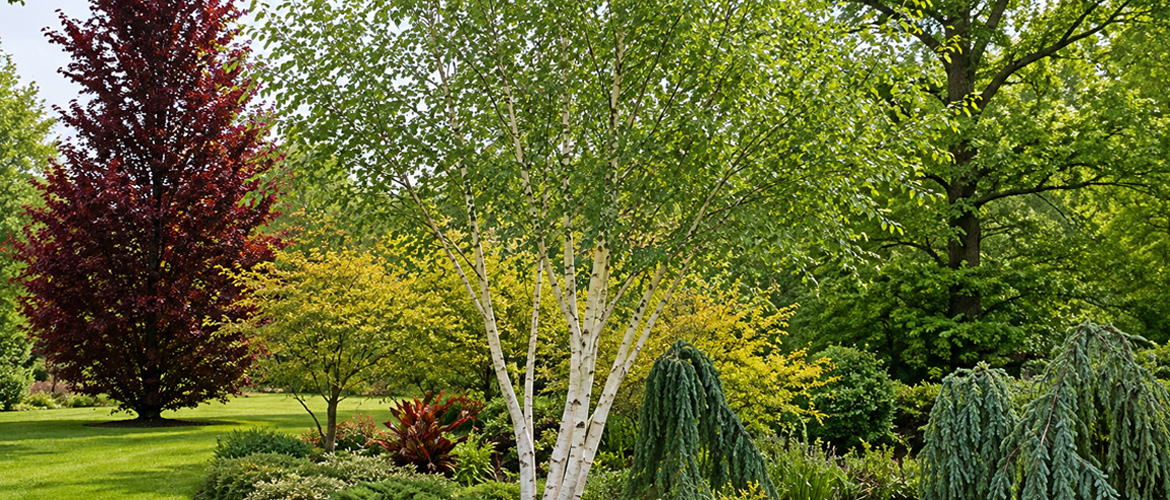
Birch Varieties for Northeast Landscapes
Birch trees have a clean, classic look that works almost anywhere: crisp bark, light canopies, fluttery leaves, and bright winter interest. But in the Northeast, and especially on Long Island, not every birch performs the same. Below is a practical guide to the most useful birch varieties.
Why Homeowners Love Birch
Birches offer year round character from white, cream, copper, or cinnamon bark, soft dappled shade that still allows underplantings, and leaves that shimmer in the breeze. The key is matching the right birch to the right site.
The Number One Long Island Rule: Reduce Stress
Most birch problems trace back to stress from heat, dry soil, compaction, reflected heat off hardscape, or poor watering during establishment. Stress makes birch vulnerable to bronze birch borer, a major pest of ornamental birches. Plan for consistent moisture and mulched protected root zones.
Top Birch Varieties
1. River Birch, Betula nigra
River birch is the workhorse for residential landscapes and usually our first conversation. It has exfoliating bark in salmon, tan, and cinnamon tones, and good heat tolerance. It suits average or heavier soils, rain garden edges, and moist spots.
River Birch Design Tips
Multi stem clumps soften hard corners. Keep turf away from the trunk flare, mulch out to the dripline, and underplant with shade tolerant perennials. It still needs water during establishment, but it forgives Long Island summers better than white barked birches.
2. Paper Birch, Betula papyrifera
Paper birch is the classic white bark that peels in sheets, but it can be pickier in warm, exposed sites. It does best in cooler microclimates with north or east exposure, and consistent moisture. It struggles in hot, dry lawns, compacted soils, areas beside broad paving, and south facing sites without irrigation.
3. Himalayan Birch, Betula utilis jacquemontii
Himalayan birch is the designer choice, with brilliant white bark and strong ornamental appeal. It makes a showpiece for front yard focal points and courtyards where irrigation is available. Plant it as a multi stem cluster, and pair it with evergreens like boxwood, inkberry, yew, or arborvitae. Even so, a white barked birch in full sun with no irrigation can become stressed, so plan soil preparation and watering.
4. Weeping Birch, Betula pendula Youngii
Weeping birch is all about form, with a cascading canopy that creates an elegant focal point. Keep it away from pools to limit leaf drop.
5. Yellow Birch, Betula alleghaniensis
Yellow birch has shiny, golden peeling bark and suits naturalistic settings with cooler, moister conditions.
6. Sweet Birch, Betula lenta
Sweet birch, also called black birch, has darker bark and a native look. It suits naturalized plantings and woodland edges.
Choosing the Right Birch for Your Property
Ask four questions. How much sun does the area get? Full sun with reflected heat calls for river birch and irrigation. Does the site dry out fast? Birch wants consistent moisture, especially in the first 2 to 3 seasons. Is the soil compacted? Compaction shortens birch lifespan. Is the site near the coast? Salt and wind add stress.
Planting and Care Tips
Mulch Correctly
Use 2 to 3 inches of mulch, keep it off the trunk flare.
Water Like It Matters
New birches need deep watering during establishment. A simple soaker hose loop under mulch works very well.
Do Not Prune in Peak Sap Flow
Birches bleed sap heavily if pruned in spring, so schedule structural pruning for the right season.
Protect Against Stress Related Pests
Bronze birch borer is strongly associated with stressed birches. Plant the right birch in the right place and keep it healthy.
Birch in Landscape Design
Himalayan birch with dark evergreens gives instant contrast. River birch with ornamental grasses feels modern and clean. A grove of 3 to 5 trunks, grouped loosely and not in a straight line, creates a natural mini woodland feel.
When Birch Might Not Be the Best Choice
You may want alternatives if the site is full sun, hot, and dry with no irrigation, if the tree must sit in a tight turf panel with no bed, or if coastal exposure is extreme and unprotected. Other trees can deliver a similar look. Call Louis Contino Landscaping at 631 351 5409.