
Azaleas
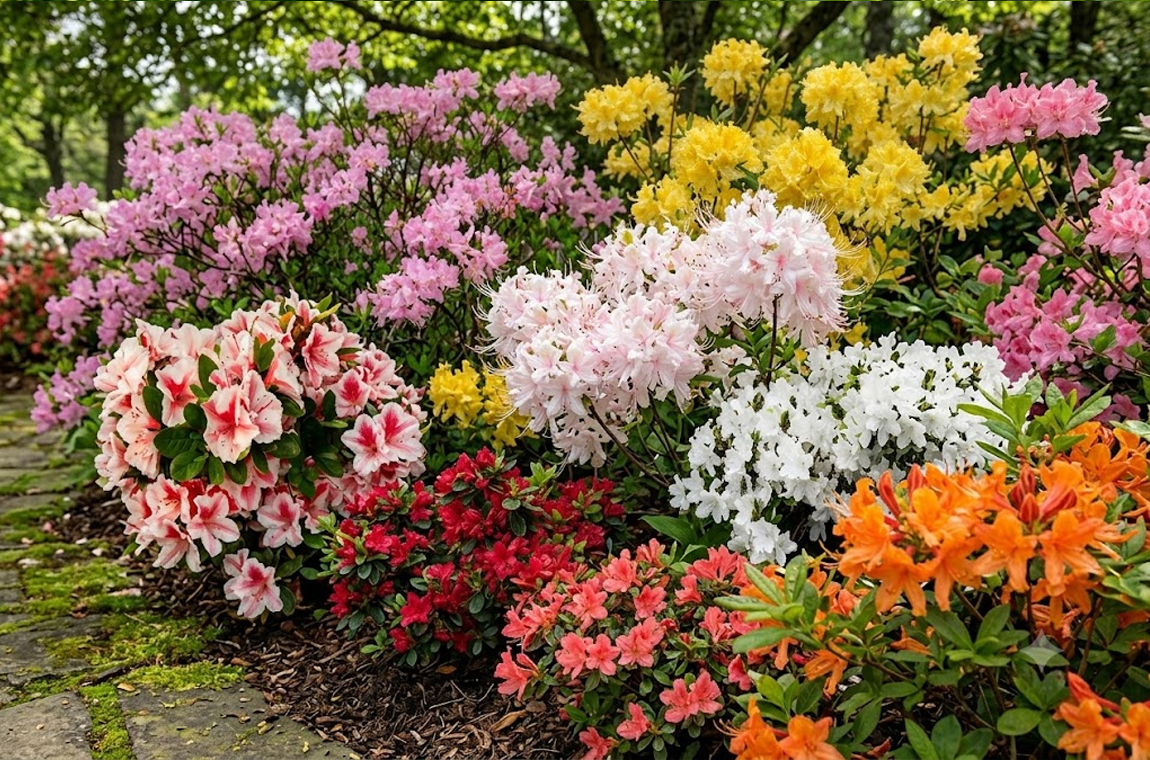
What Are Azaleas? The term “azalea” refers to a group of flowering shrubs in the genus Rhododendron. While all azaleas are technically rhododendrons, gardeners distinguish them by their typically smaller leaves, abundant spring flowers, and bushy habits. Azaleas range in size from low groundcovers to multi foot foundation plants — and they bloom in countless shades including white, pink, red, orange, yellow, and purple.
Azaleas are beloved for their big, vibrant flowers and adaptability to a variety of garden situations, from woodland gardens to foundation plantings, containers, or borders. Many varieties are evergreen in warmer climates, while others are deciduous, losing their foliage in winter.
Azalea Color Varieties — A Bloom for Every Space
Garden centers and nurseries offer thousands of azalea cultivars, each with unique flower hues, growth habits, and sizes. Here are some of the most striking color families and standout varieties you might choose for your landscape:
Classic Pink & Rose Shades
Pink azaleas are perhaps the most iconic, offering soft romantic tones that suit traditional gardens:
- ‘Sweet September’ — a late blooming pink that keeps gardens colorful long after spring.
- Pinkshell azalea (Rhododendron vaseyi) — a native species with fragrant pink blooms and a lovely presence in naturalized beds.
Pink shades range from pale pastel to deep rose, and many cultivars combine pink with subtle blushes of other hues for extra complexity.
Bold Reds & Crimson
For dramatic pops of color:
- ‘Wolfpack Red’ — rich, deep red blooms on a compact shrub.
- Hino Crimson — a vibrant classic that creates an arresting focal point in spring.
These intense red tones are perfect for drawing the eye or creating a bold contrast with lighter plantings.
Pure Whites & Creams
White azaleas provide a serene, elegant effect:
- Delaware Valley White — clean, pure blossoms that brighten shaded corners or border beds.
White blooms also pair beautifully with deeper colors and can be used to lighten and balance garden compositions.
Citrus & Yellow Tinged Blooms
Yellow and peach tones are rarer but highly rewarding:
- Lemon Lights — lemon yellow flowers that glow in sun or dappled shade.
- Mandarin Lights — warm orange red blooms that transition from deep to soft hues through the season.
These shades work especially well in summer and late spring palettes, bringing fresh warmth to plantings.
Bi Color & Patterned Flowers
Many modern hybrids also showcase bi colored or patterned petals — blossoms edged with contrasting hues or splashed with spots and streaks. With thousands of cultivars available, creative gardeners can mix and match colors to create dynamic visual tapestries in garden beds.
Growing Conditions & Care Essentials
Azaleas reward gardeners with color and garden presence — but like all plants, they grow best under the right conditions.
Light
Most azaleas prefer partial shade or filtered sunlight — especially morning sun with afternoon shade. Too much hot sun can scorch foliage and reduce flower longevity, while too little light can result in sparse blooms.
Soil Requirements
Azaleas are acid loving plants and thrive in well drained, organically rich, acidic soil (pH around 4.5–6.0). Amending soil with pine bark, compost, or peat moss helps create a hospitable root environment and aids water retention without waterlogging.
Watering
Consistent moisture is important, especially while establishing. Azaleas don’t like “wet feet,” so make sure soil drains well. Mulching helps retain moisture and suppress weeds.
Bloom Timing
Traditional azaleas primarily bloom in spring, but newer series like Encore® Azaleas rebloom in late summer and even fall — giving gardens extended color beyond a single season.
Pruning
Light pruning immediately after flowering helps shape plants and encourage fuller growth next spring. Avoid heavy pruning late in the season, as this can reduce next year’s blooms.
Wildlife Benefits
Beyond garden beauty, azaleas also contribute to garden ecology:
- Their blooms attract bees and butterflies in spring and summer.
- Dense foliage can provide shelter for small birds and garden wildlife.
Although they do not produce edible fruit, azaleas are valued for their nectar resources and structural habitat value.
Azaleas & Deer — What Every Gardener Needs to Know
When planning a garden in deer habitat, deer resistance becomes a key concern — and azaleas have a somewhat mixed reputation.
Not Truly Deer Proof
According to controlled deer resistance ratings (e.g., Rutgers University), azaleas are often eaten by deer, especially in areas with high deer pressure. They’re rated as “frequently severely damaged” by deer, meaning deer commonly nibble on leaves, buds, and branches when food is scarce or deer are abundant.
Moderate or Occasional Browsing
Other perspectives note that azaleas contain natural compounds that can be mildly toxic to deer, which may reduce interest compared to tastier plants. In some regions deer may avoid them unless there’s limited forage.
Protective Strategies
Even if azaleas aren’t naturally deer proof, gardeners can reduce deer browsing with these strategies:
- Fencing: Physical barriers like deer fencing protect beds completely.
- Repellents: Motion activated devices, sprays, or scent deterrents can make deer think twice.
- Plant placement: Situating azaleas near walkways or open spaces can reduce deer access.
- Companion plantings: Deer tend to avoid plants with strong scents (e.g., lavender, sage) — these can act as deterrents when planted near azaleas.
Realities by Region
Deer feeding behavior varies: in some areas deer heavily browse azaleas, while in others they might only nibble them occasionally. Understanding local deer populations and observing garden patterns helps tailor protection measures.
Landscape Design with Azaleas
Azaleas are versatile and can be used in many landscaping contexts. Here are some inspired ways to incorporate them:
Woodland Garden Displays
Azaleas shine under filtered shade and look stunning planted beneath trees or shrubs such as dogwood, oak, and maple. Their spring blooms contrast beautifully with green foliage in woodland or naturalized beds.
Foundation & Border Plantings
Position azaleas along home foundations or walkways to provide bright seasonal color and soften architectural lines. Mix shades — light pink, white, or deep red — for a layered color effect.
Mass Plantings for Impact
Mass plantings of azaleas create a cottage garden feel or dramatic floral carpet. Plant in drifts with staggered bloom times (e.g., early spring varieties with late bloomers) for extended delight.
Containers & Patio Gardens
Smaller azalea varieties (e.g., dwarf or compact cultivars) make excellent container plants. Group them in patio pots or balcony gardens and enjoy color up close.
Seasonal Care Guide
Here’s a breakdown of azalea care throughout the year:
Spring
- Enjoy the main bloom season.
- Deadhead spent flowers and lightly shape.
Summer
- Ensure consistent moisture; mulch to retain soil water.
- Watch for lace bugs and provide shade in very hot climates.
Fall
- Some Encore azaleas will rebloom — maintain watered soil.
- Apply a light autumn mulch.
Winter
- Maintain mulch over roots.
- Deer protection may be essential in snowy regions.
Popular Azalea Cultivar Examples
Here’s a sample of azaleas you might encounter or plant, across color and bloom habits:
| Variety | Color | Bloom Season | Notes |
|---|---|---|---|
| Encore® Autumn Sunburst | Yellow/Orange | Spring & Fall | Multi season color, good for warmth gardens |
| Wolfpack Red | Deep Red | Spring | Compact, striking color |
| Delaware Valley White | White | Spring | Classic pure white blooms |
| Lemon Lights | Lemon Yellow | Spring | Deer resistant options noted |
| Mandarin Lights | Orange Red | Spring | Warm tones with dark foliage |
Final Thoughts: Why Azaleas Are Garden Favorites
Azaleas are a timeless choice for gardeners who crave vibrant spring color, adaptable growth habits, and elegant landscape presence. With hundreds of cultivars available, you can build color schemes, hedge lines, woodland gardens, or shaded borders with rich floral diversity.
While they are not completely deer resistant and may be browsed under heavy pressure, azaleas can be managed with good garden practices and protection strategies. Their ecological value — especially for pollinators in spring and summer — adds another layer of benefit to these stunning shrubs.
With the right site, soil, and seasonal care, azaleas can flourish for many years, giving your garden a colorful heart and seasonal rhythm that blooms with joy year after year.