
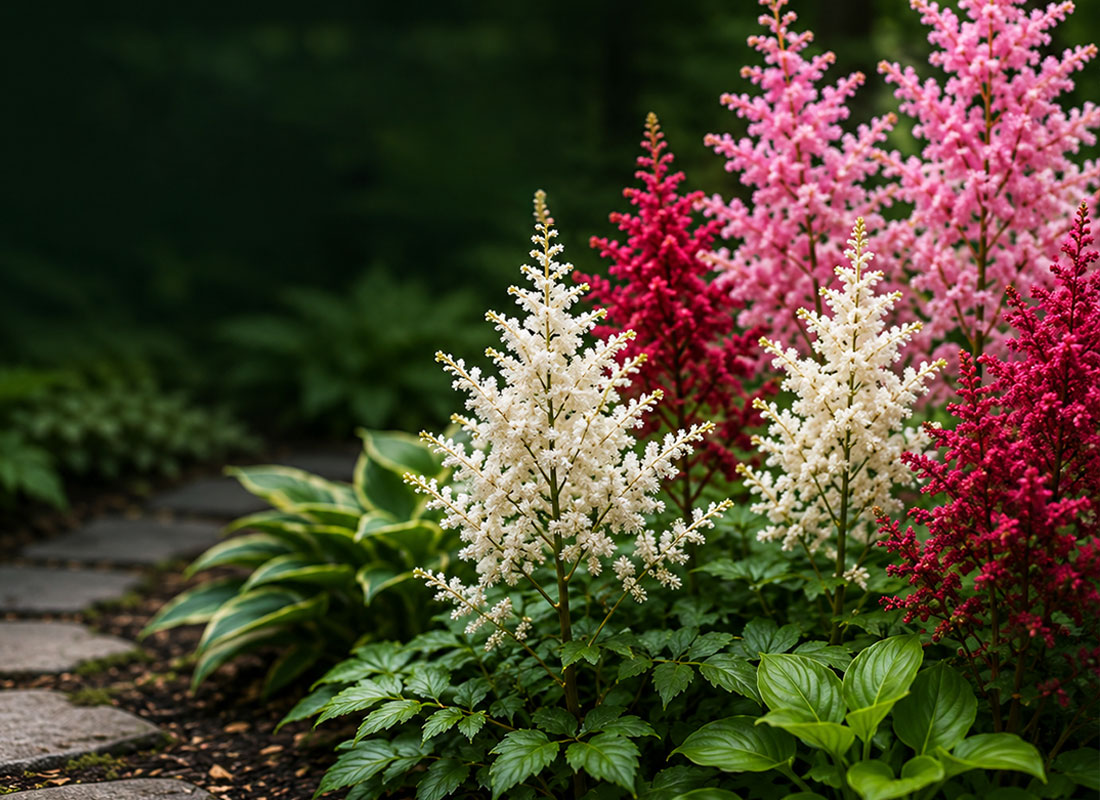
Astilbes: A Complete Guide to One of the Best Perennials for Shade Gardens
Astilbes are one of those plants that quietly steal the show. They don’t shout with oversized blooms or demand full sun to perform, yet when planted correctly, they deliver lush foliage, elegant flower plumes, and reliable seasonal color year after year. For homeowners struggling with shaded areas, damp soils, or woodland-style landscapes, astilbes are often the missing piece that brings everything together.
In professional landscape design, astilbes are valued for their texture, movement, and versatility. They soften hard edges, brighten dark corners, and provide a refined, natural look that works just as well in formal gardens as it does in relaxed, naturalistic plantings. This article dives deep into astilbes—what they are, how to grow them successfully, and the most popular and useful varieties for residential landscapes.
What Are Astilbes?
Astilbe is a genus of herbaceous perennial plants native to Asia and North America. They are best known for their feathery, plume-like flowers that rise above mounds of finely textured foliage in late spring through summer. Depending on the variety, astilbes bloom in shades of white, cream, pink, rose, lavender, and deep red.
Astilbes thrive in partial shade to full shade and prefer consistently moist soil, making them ideal for areas where other flowering plants struggle. They are commonly used in shaded borders, woodland gardens, along streams or ponds, and in foundation plantings where sun exposure is limited.
Why Astilbes Are a Favorite in Landscape Design
Astilbes check many boxes for both homeowners and professional landscapers:
- Shade tolerance: Few perennials flower reliably in shade the way astilbes do.
- Long-lasting blooms: The flowers hold color for weeks and fade gracefully.
- Textural contrast: Their soft plumes contrast beautifully with broad-leaf plants like hostas.
- Low maintenance: Once established, astilbes are easy to care for.
- Deer resistance: While not completely deer-proof, astilbes are usually left alone.
- Moisture tolerance: Ideal for damp or poorly drained soils.
Because of these traits, astilbes are frequently used in high-end residential landscapes, especially in wooded properties, North Shore estates, and gardens with mature trees that limit sunlight.
Understanding Astilbe Foliage and Flowers
Astilbe foliage is just as important as the flowers. The leaves are finely divided, fern-like, and often glossy, creating a lush, layered look even when the plant is not in bloom. Some varieties have bronze or reddish new growth in spring, adding early-season interest.
The flowers form upright plumes that range from airy and delicate to dense and bold. These plumes sway gently in the breeze, adding movement to the garden—something that static shade plantings often lack.
Ideal Growing Conditions for Astilbes
Light Requirements
Astilbes perform best in partial shade, especially morning sun with afternoon shade. In cooler climates or consistently moist soils, some varieties tolerate more sun, but full sun in dry soil will cause stress, leaf scorch, and reduced flowering.
Soil Preferences
Moist, well-drained soil rich in organic matter is ideal. Astilbes do not tolerate drought well, so sandy or fast-draining soils should be amended with compost, leaf mold, or organic soil conditioners.
Watering Needs
Consistent moisture is key. Astilbes are not “plant it and forget it” perennials in dry locations. Regular watering, drip irrigation, or placement near water sources helps them thrive.
Hardiness
Most astilbes are hardy in USDA Zones 3–8, making them well-suited for Northeast landscapes.
How to Use Astilbes in the Landscape
Astilbes are incredibly flexible and can be used in many ways:
- Mass plantings for bold color impact in shaded areas
- Mixed perennial borders paired with hostas, ferns, and hellebores
- Foundation plantings where shade limits other flowering options
- Woodland gardens for a natural, layered look
- Water features such as ponds or stream edges
They work especially well when planted in groups of odd numbers (3, 5, or more) to create a natural flow rather than isolated single plants.
Popular Astilbe Varieties and Series
There are dozens of astilbe varieties, but they generally fall into a few main groups. Each group has unique characteristics that make it useful for different design goals.
Arendsii Astilbes (Astilbe × arendsii)
The Arendsii hybrids are the most commonly used astilbes in residential landscapes. They are known for their full, upright plumes and compact, well-behaved growth habit.
Key characteristics:
- Bloom time: Late spring to early summer
- Height: 18–30 inches
- Flower colors: White, pink, rose, red
- Growth habit: Upright and clumping
Popular varieties:
- ‘Bridal Veil’ – Graceful white plumes, excellent for brightening shade
- ‘Fanal’ – Deep red flowers with dark green foliage
- ‘Deutschland’ – Clean white blooms, very uniform
- ‘Rheinland’ – Soft pink plumes, great for mass plantings
These varieties are often used in formal landscapes and high-visibility areas.
Chinensis Astilbes (Astilbe chinensis)
Astilbe chinensis varieties are more tolerant of sun and dry conditions than most astilbes, making them a valuable option in challenging sites.
Key characteristics:
- Bloom time: Mid to late summer
- Height: 24–36 inches
- Flower colors: Lavender, purple, pink
- Notable trait: Better drought tolerance
Popular varieties:
- ‘Visions in Pink’ – Compact with soft rose blooms
- ‘Visions in Red’ – Rich magenta-red flowers
- ‘Pumila’ – Lower-growing, excellent as a groundcover
These are excellent choices for landscapes where irrigation is limited.
Japonica Astilbes (Astilbe japonica)
Japanese astilbes bloom early and are valued for their neat, compact form.
Key characteristics:
- Bloom time: Late spring
- Height: 12–24 inches
- Flower colors: White, pale pink
- Growth habit: Compact and tidy
Popular varieties:
- ‘Montgomery’ – Deep red plumes, dramatic foliage
- ‘Peach Blossom’ – Soft pink flowers with excellent form
These varieties work well in smaller gardens and tight planting areas.
Thunbergii Astilbes (Astilbe thunbergii)
Thunbergii astilbes are known for their airy, cascading flower plumes and later bloom time.
Key characteristics:
- Bloom time: Mid to late summer
- Height: 24–36 inches
- Flower style: Loose, flowing plumes
Popular variety:
- ‘Straussenfeder’ (Ostrich Feather) – Arching pink plumes with movement
These are ideal for naturalistic or woodland-style landscapes.
Planting and Maintenance Tips
Planting
- Space astilbes 12–24 inches apart, depending on variety
- Plant crowns just below soil level
- Incorporate compost into planting holes
Fertilizing
A balanced, slow-release fertilizer in spring is usually sufficient. Over-fertilizing can lead to excessive foliage and fewer flowers.
Pruning
Deadhead spent blooms for a cleaner look, or leave them for winter interest. Cut plants back to the ground in late fall or early spring.
Dividing
Divide astilbes every 3–4 years to maintain vigor and prevent overcrowding.
Common Problems and How to Avoid Them
- Leaf scorch: Caused by too much sun or insufficient water
- Poor flowering: Often due to dry soil or excessive shade
- Crown heaving: Mulch in winter to protect roots
Most issues are easily avoided with proper placement and consistent moisture.
Astilbes in Professional Landscape Design
In high-end residential landscaping, astilbes are often used as a unifying element—tying together trees, shrubs, and hardscape features. Their refined appearance makes them ideal for properties that require a polished yet natural look. Designers frequently layer astilbes with ferns, hostas, and ornamental grasses to create depth and seasonal progression.
When used thoughtfully, astilbes elevate shaded areas from “problem zones” to some of the most beautiful parts of the property.
Final Thoughts
Astilbes are one of the most dependable, elegant, and versatile perennials available for shade gardens. With their feathery blooms, rich foliage, and adaptability, they offer solutions where many plants fall short. Whether used in large drifts, mixed borders, or intimate garden spaces, astilbes bring softness, color, and life to landscapes that might otherwise feel flat or underwhelming.
For homeowners and designers alike, astilbes are proof that shade doesn’t mean boring—it simply requires the right plants.