
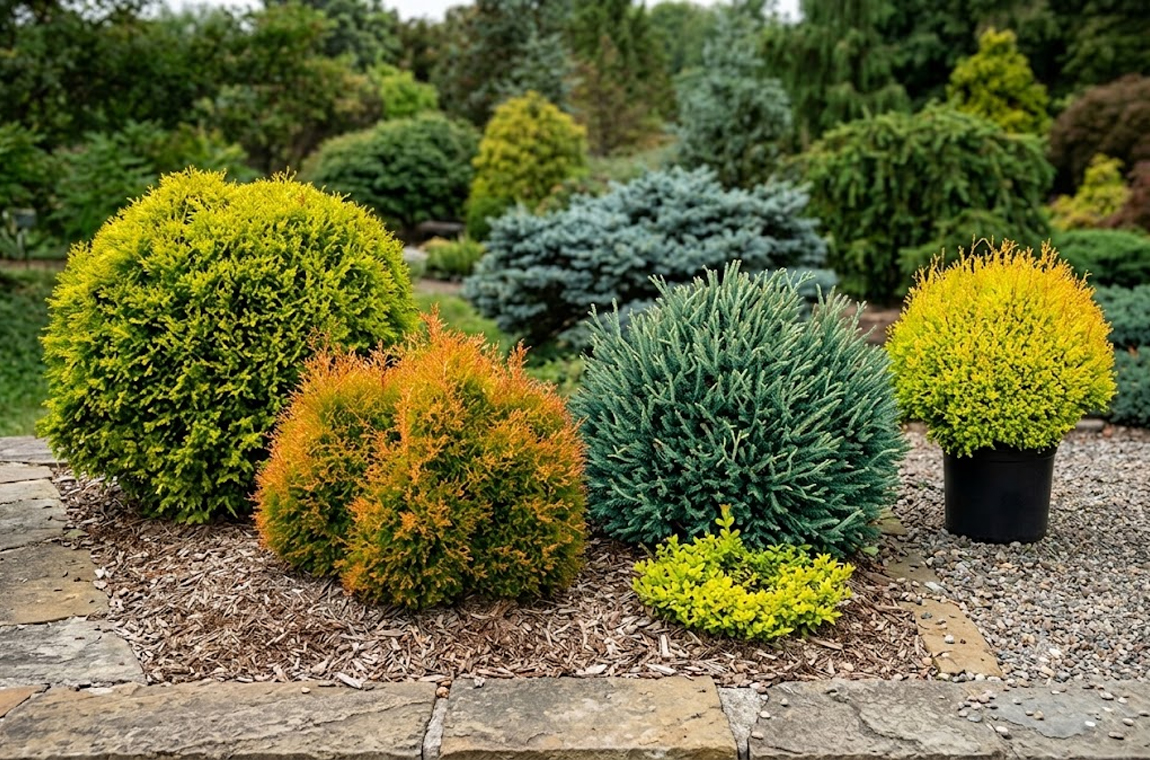
Arborvitae
Arborvitae — Latin name Thuja — are classic evergreen shrubs and trees that provide structure, year round interest, and versatility in landscapes. From compact groundcover forms to brightly colored ornamental globes, arborvitae options like Fire Chief, Golden Globe, Pancake, and Rheingold bring color, texture, and hardiness to garden beds, borders, containers, and mixed plantings.
In this comprehensive guide you’ll discover:
- What arborvitae are and how they grow
- Detailed profiles of these four varieties
- Deer resistance realities
- Planting, care, and maintenance
- Landscape design ideas
- Seasonal interest and best practices
What Are Arborvitae?
Arborvitae (Thuja spp.) are evergreen conifers native to North America and parts of Asia, belonging to the cypress family (Cupressaceae). They’re prized in gardens for:
- Their dense foliage
- Year round green structure
- Low maintenance needs
- Ability to fit a wide range of planting purposes, from groundcovers to specimen plants
Many arborvitae varieties are relatively cold hardy (down to USDA zone 3 or 4 depending on cultivar) and tolerate full sun to partial shade. While deer damage can occur on some cultivars, newer and smaller varieties tend to be less appealing or more resilient than classic tall screening types.
Arborvitae Variety Spotlight
Let’s explore four standout cultivars — each bringing something unique to the landscape.
Fire Chief™ Arborvitae — Fiery Four Season Color
Arborvitae Fire Chief™ features shifting foliage color that glows all year. These globes shine in spring gold and deepen to red in fall.
Overview
Fire Chief™ (Thuja occidentalis ‘Congabe’) is a compact, globe shaped evergreen that offers dynamic seasonal foliage color — a rare trait among arborvitae. In spring it bursts with bright golden tones, shifts to softer amber in summer, then deepens to rich orange and red hues in fall and winter, creating a warm glow in colder months.
- Height & Spread: ~2–4 ft tall and wide — ideal for accents and small spaces.
- Habit: Naturally round without pruning.
- Hardiness: USDA zones ~5a–8b.
Landscape Uses
- Foundation plantings to brighten home fronts
- Specimen accents in rock or mixed shrub gardens
- Containers on patios and terraces
- Mass plantings to provide rhythm and color depth
The soft, globe form and shifting autumn tones make Fire Chief especially effective in formal or contemporary landscapes where year round interest matters.
Deer Resistance
Arborvitae breed and deer preferences vary by region. Some sources list Fire Chief™ as deer resistant, but experiences differ; deer may browse any Thuja when food is scarce, especially in winter. You may want repellents or temporary barrier protection in high pressure deer areas.
Golden Globe Arborvitae — Sunshine All Year
Golden Globe Arborvitae’s bright foliage makes a bold year round landscape accent.
Overview
Golden Globe (Thuja occidentalis ‘Golden Globe’) is a classic dwarf, golden evergreen with a tidy, rounded form that retains bright yellow gold foliage through seasons — a standout contrast to deeper green plantings.
- Height & Width: Typically ~3–4 ft tall and wide.
- Foliage: Soft, scale like golden sprays that hold color even through winter chills.
- Zones: Thrives broad zone range (often 2–8 depending on source), meaning adaptability in many regions.
Landscape Uses
Golden Globe excels as:
- Accent plantings in perennial or shrub borders
- Container focal points with contrasting foliage plants
- Low hedges or groupings for visual impact
- Rock gardens where its bright tones lift seasonal color
Pair Golden Globe with deeper greens, purples, or flowering perennials like salvia and coneflower for stunning color contrasts.
Deer Resistance
Generally considered resistant by many nurseries, Thuja occidentalis cultivars are often less attractive than softer broadleaf shrubs. However, in some deer intense gardens they may still be browsed, especially if alternatives are limited.
Pancake™ Arborvitae — Groundcover & Low Evergreen Texture
Pancake™ arborvitae brings a unique low, layered evergreen form to landscapes. (Gardenia)
Overview
Pancake™ (Thuja occidentalis ‘Concesarini’) stands out from typical arborvitae with its low, horizontally spreading form. Rather than growing upward, it remains flat and broad, like a “pancake” of evergreen foliage.
- Height: ~1–1.5 ft tall — perfect as a groundcover or foreground anchor.
- Spread: ~2–3 ft or more — creates a lush, evergreen carpet.
- Foliage: Blue green in summer, often turning cooler blue tones in winter.
- Zones: Reliable in many climates (zones ~4–8).
Landscape Uses
Pancake™ adds textural contrast and low evergreen presence where height isn’t desired:
- Front of borders or walkways
- Rock gardens and alpine plantings
- Groundcover swaths between larger shrubs
- Acid garden or ornamental grass combinations
Its unique shape makes it a conversation piece that brings evergreen structure without towering over other plants.
Deer Resistance
Like other drought tolerant evergreens, Pancake™ is relatively deer resistant because deer largely prefer other food sources. However, hungry deer may still nibble on soft growth in lean winter months.
Rheingold Arborvitae — Golden Globe with Deep Winter Color
Rheingold Arborvitae lights up landscapes with golden tones and coppery winter hues.
Overview
Rheingold (Thuja occidentalis ‘Rheingold’) is a dwarf to medium evergreen known for its bright golden foliage throughout the year, which often transitions to coppery or bronze hues in winter — bringing rich color to cold season gardens.
- Height & Spread: ~3–5 ft tall and wide at maturity.
- Foliage: Golden yellow to bronze shades across seasons.
Landscape Uses
Rheingold provides color and structure as:
- A specimen evergreen in small or mixed beds
- Mass plantings for luminous ground coverage
- Foundations where year round brightness is desired
- Container plantings that pop against darker foliage
Its winter bronze glow can anchor winter gardens that often look dull without evergreen color.
Deer Resistance
While some sources list Rheingold as deer resistant, they also note that deer may browse on arborvitae where food is scarce — especially in exposed sites where deer feel comfortable feeding.
Growing & Caring for Arborvitae (All Varieties)
Arborvitae are generally easy to grow with the right basics. Here’s what you need to know for success:
Light & Placement
- Most perform best in full sun to light shade — about 6+ hours of sunlight daily helps keep foliage dense and vibrant.
- In hotter climates, a bit of afternoon shade can reduce stress.
Soil & Planting
- Well drained soil is essential — arborvitae dislike constantly soggy roots.
- Enrich soil with compost at planting to help root establishment.
Watering
- Water deeply during the first few seasons to establish a strong root system.
- Once established, many cultivars become drought tolerant but still appreciate moisture during prolonged dry spells.
Pruning & Maintenance
- Most globe or naturally shaped cultivars (Fire Chief, Golden Globe) don’t need pruning to keep form.
- For Pancake™ and Rheingold, light shaping after new spring growth can tidy appearance.
Mulching & Winter Care
- Mulch around the root zone to help retain moisture and moderate soil temperatures.
- In colder climates, wind break or burlap wrap can protect tender new foliage from winter desiccation.
Deer Resistance — The Reality
“Deer resistant” is a term nurseries use based on typical browsing preferences; it does not guarantee deer won’t eat a plant. While many arborvitae (especially dwarf or unusual forms) are less preferred by deer, hungry deer will nibble and browse evergreen shrubs when natural food is scarce — particularly in winter. Using repellents, physical barriers, or planting near deterrents like strong scented herbs can help reduce browsing. (Heyden's Gardens)
Landscape Design Ideas
Accent & Specimen Planting
Use Fire Chief™ or Rheingold at focal points in mixed beds to draw the eye with color contrast. Their round forms and luminous hues give year round interest.
Foundation Plantings
Line foundations with Golden Globe or group several forms for layered evergreen structure. The golden foliage brightens shady exteriors.
Groundcover and Rock Gardens
Plant Pancake™ Arborvitae as a groundcover or low evergreen accent in rock gardens, borders, or at the front of beds to create a soft evergreen carpet.
Evergreen Borders & Mixed Plantings
Mix arborvitae with ornamental grasses, perennial flowers, and other shrubs. The evergreen backdrop supports seasonal color layers and ecosystem diversity.
Seasonal Care Calendar
Spring
- Plant or divide new plants.
- Apply mulch; feed lightly with slow release fertilizer.
Summer
- Water regularly during dry spells.
- Light prune faded or straggly growth.
Fall
- Refresh mulch.
- Monitor for winter windburn and plan protective measures if needed.
Winter
- Enjoy evergreen form.
- Protect against winter dry and heavy snow loading as needed.
Final Thoughts: Why These Arborvitae Deserve a Place in Your Garden
Whether you’re looking for:
- Fire colored interest with Fire Chief™
- Bright evergreen glow with Golden Globe
- Low evergreen texture with Pancake™
- Year round golden brilliance with Rheingold
… these arborvitae cultivars offer visual appeal, easy care, and versatile landscape use that make them valuable for gardens large and small.
While deer resistance can vary depending on local deer pressure and available food, planting robust, well established shrubs and using deterrent strategies can help protect your investment.
From foundation plantings to rock gardens and mixed borders, incorporating these evergreen gems ensures year round structure and dynamic color in your outdoor spaces.