
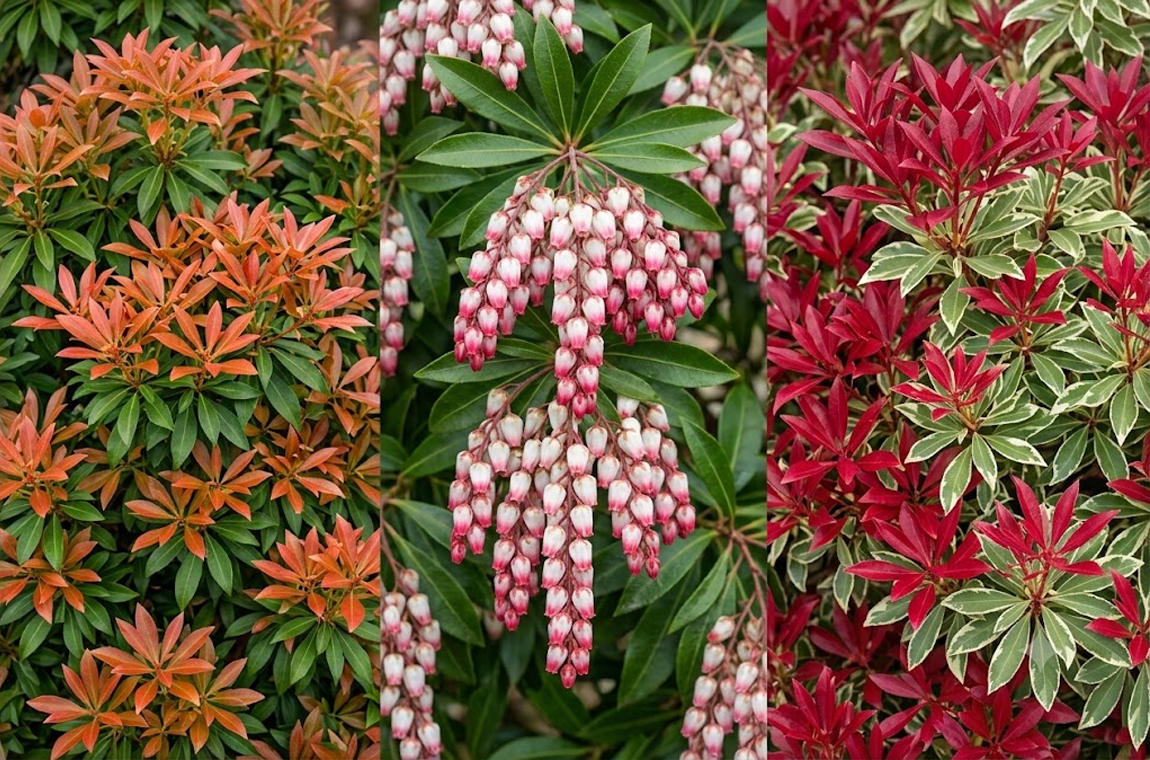
Andromeda (Pieris japonica) — Dorothy Wycoff, Mountain Fire, Silver Flame & More (Deer Resistant Evergreen Shrubs)
If you’re looking for an elegant evergreen shrub that offers year round structure, seasonal blooms, striking foliage, and deer resistance, then Andromeda (botanical name Pieris japonica) deserves a leading spot in your garden design plans. Also called Japanese Andromeda or Japanese Pieris, this classic ornamental has long been prized for its festive early spring flowers, eye catching new growth, and ability to thrive in partial shade with moist, well drained soil.
What Is Andromeda (Pieris japonica)?
Andromeda refers to Pieris japonica, a medium sized evergreen shrub in the heath family (Ericaceae). Native to parts of East Asia, it’s cultivated worldwide for its multi season ornamental value — from early spring blooms to color changing new growth and glossy evergreen leaves that persist through winter.
This shrub is also commonly known as the lily of the valley shrub, because its drooping clusters of small, urn shaped flowers resemble that favorite perennial. Like many ericaceous plants (such as rhododendrons and azaleas), Andromeda thrives in acidic, well drained soil and is a great companion for other acid loving garden plants.
A key practical benefit for many gardeners is that Pieris japonica is generally considered deer resistant — meaning deer usually avoid it in favor of tastier plants. While no plant is completely deer proof, Andromeda’s texture and compounds tend to make it unattractive to grazing deer.
Spotlight on Dorothy Wycoff — Elegant Evergreen Flowering Shrub
Overview
One of the most beloved selections of Japanese Andromeda, Pieris japonica ‘Dorothy Wycoff’ is appreciated for its year round appeal — from brilliant winter flower buds to soft spring blossoms and rich evergreen foliage that stays attractive through many seasons.
Appearance
- Foliage: Glossy dark green evergreen leaves provide lush garden structure throughout the year.
- Flower buds: Deep red buds appear in late winter or early spring, adding pops of winter color.
- Flowers: Pale pink blossoms open in spring, then age to creamy white — a gentle, fragrant show before many other shrubs wake up.
This color progression — from red buds to soft pink flowers to white blooms — gives Dorothy Wycoff a multi stage visual interest that extends across the seasons.
Size & Form
- Height: ~5–7 feet
- Spread: ~5–7 feet
- Habit: Upright, rounded evergreen shrub
Its size makes it well suited as a specimen plant, a natural foundation shrub, or part of a mixed evergreen border.
Deer Resistance & Wildlife Value
Like most Japanese Pieris varieties, Dorothy Wycoff is deer resistant — a major advantage in landscapes prone to browsing pressure.
The flowers also attract early season pollinators such as bees, providing vital nectar when few other shrubs are in bloom.
Best Growing Conditions
- Light: Partial sun to full shade (dappled light is ideal)
- Soil: Acidic, moist but well drained — enriched with organic matter
- Water: Keep soil evenly moist, especially in establishment years
- Pruning: Light shaping after flowering; avoid heavy pruning into old wood
In colder areas, mulch around the base in late fall to protect roots from winter winds and frost heaving.
Mountain Fire — Year Round Fire in the Garden
Overview
Pieris japonica ‘Mountain Fire’ is named for its dramatic new foliage color — vibrant red emerging in spring that slowly matures to rich green. This fiery display, combined with classic Andromeda flowers, makes it a standout shrub for season long interest.
Seasonal Highlights
- Spring New Growth: Brilliant red or fiery orange shoots bring a bold splash of color to spring borders.
- Flowers: Clear white clusters of urn shaped blossoms appear from late March through mid April — a lovely contrast to the colorful new foliage.
- Mature Foliage: As the season progresses, foliage transitions to deep green while retaining a dynamic presence in the landscape.
- This cultivar’s visual drama comes not just from its flowers but from its fabulous foliage transitions, making it particularly effective near walkways, patios, or focal beds.
Size & Form
- Height: ~6–8 feet
- Spread: ~5–6 feet
- Habit: Upright, formal evergreen shrub
With its upright habit and size, Mountain Fire works wonderfully as a backdrop plant in large shrub borders, a specimen anchor, or part of woodland gardens.
Deer Resistance
Like other Andromeda cultivars, Mountain Fire tends to be deer resistant, making it a reliable choice for deer prone landscapes.
Landscape Uses
- Contrast Plant: Pair with darker evergreen foliage (like boxwoods or rhododendrons) — the red new growth will stand out dramatically.
- Pollinator Gardens: Early blooms feed bees emerging from dormancy.
- Mixed Borders: Great with shade perennials (hostas, ferns) for layered summer interest.
Silver Flame — Variegated Andromeda with Year Round Interest
While you asked specifically about Silver Flame, most similar named cultivars — such as Pieris japonica ‘Flaming Silver’ — fall under broader Pieris selections with variegated foliage and striking seasonal color shifts. These look beautiful in mixed plantings with irises, rhododendrons, and shade perennials.
What Makes Variegated Andromeda Special
Variegated selections like Flaming Silver combine:
- Red tinted new growth that matures to green leaves edged in silver white
- Creamy white bell shaped flowers in early to mid spring
- Compact, tidy form ideal for smaller gardens or container planting
The contrast between the new red shades, variegated mature foliage, and elegant blooms adds multi layered color throughout the growing season.
Best Uses in the Landscape
Variegated Andromeda cultivars like Flaming Silver are especially effective:
- As accents in shady borders
- In containers for patios or entrances
- With other variegated evergreens for patterned foliage displays
They’re slightly more sensitive to intense summer sun than solid leaf varieties, so dappled shade works best for foliage clarity and plant health.
Andromeda Care: How to Grow Beautiful, Healthy Shrubs
Japanese Andromeda is relatively low maintenance, but giving it the right conditions ensures lush foliage and abundant spring blooms.
Light & Site
- Partial shade to dappled sun is ideal, especially in hotter climates.
- In cooler regions, a bit more sun helps blooms and foliage color.
Avoid intense afternoon sun in hot zones, as it can scorch leaves or stress the plant.
Soil & Moisture
Pieris japonica thrives in acidic, humus rich, well drained soil. Adding compost or organic matter at planting improves soil structure and moisture retention.
Soil that stays moist but not soggy encourages strong root development — soggy conditions can lead to root rot.
Watering & Mulch
- Water regularly during establishment.
- Once established, maintain moist soil with mulch to retain moisture and suppress weeds.
- Avoid letting the plant dry out during hot spells.
Mulching with pine needles or ericaceous compost also helps maintain acidic soil conditions favored by Pieris.
Pruning & Maintenance
- Prune immediately after flowering — late spring is ideal.
- Avoid heavy pruning into old wood, as this can limit next year’s blooms.
- Remove dead or crossed branches to maintain good airflow and health.
Minimal ongoing pruning keeps the shrub looking tidy while preserving its natural form.
Seasonal Interest
- Late winter to early spring: Showy flower buds open into delicate bell blooms.
- Spring to summer: New foliage emerges (often in fiery red or copper tones on some cultivars).
- Fall & winter: Evergreen foliage maintains structure and color.
Deer Resistance & Wildlife Benefits
Andromeda’s leathery leaves and natural compounds make it unattractive to deer and rabbits, earning it a place on many deer resistant plant lists — though, as with all “deer resistant” plants, no plant is totally deer proof in extreme conditions.
At the same time, its early spring flowers provide nectar for bees and other pollinators, making it a valuable addition to wildlife friendly gardens.
Landscape Design Ideas
1. Woodland Garden Foundation
Plant Dorothy Wycoff or Mountain Fire with azaleas, rhododendrons, ferns, and hostas to create a layered, woodland edge effect with year round interest.
2. Mixed Evergreen Border
Mix multiple Pieris cultivars (including variegated forms like Silver Flame) with evergreen conifers and shrubs to create a textured, seasonal display.
3. Specimen Planting
Use Mountain Fire as a standalone specimen near patios or entrances — its fiery new growth draws the eye.
4. Partial Shade Accent
In shady areas, combine Andromeda with shade tolerant perennials (like hellebores or bleeding hearts) for contrast and early season blooms.
Seasonal Care Calendar
Spring
- Apply acid loving plant fertilizer.
- Enjoy blooms and new foliage.
Summer
- Maintain even moisture.
- Mulch to conserve water.
Fall
- Remove spent blooms.
- Protect base with mulch as temperatures drop.
Winter
- Enjoy evergreen structure.
- Protect from harsh winds in colder zones.
Final Thoughts: Why Andromeda Belongs in Your Garden
Andromeda (Pieris japonica) is more than just an evergreen shrub — it’s a garden workhorse that delivers:
- Year round interest with evergreen foliage and spring flowers
- Seasonal drama with colorful new leaves on select cultivars
- Deer resistance in landscapes where grazing is a challenge
- Wildlife appeal for pollinators in early spring
Whether you choose the elegant Dorothy Wycoff, the fiery Mountain Fire, or a variegated form like Silver Flame, you’re adding multi season beauty and robust structure to your outdoor space.