
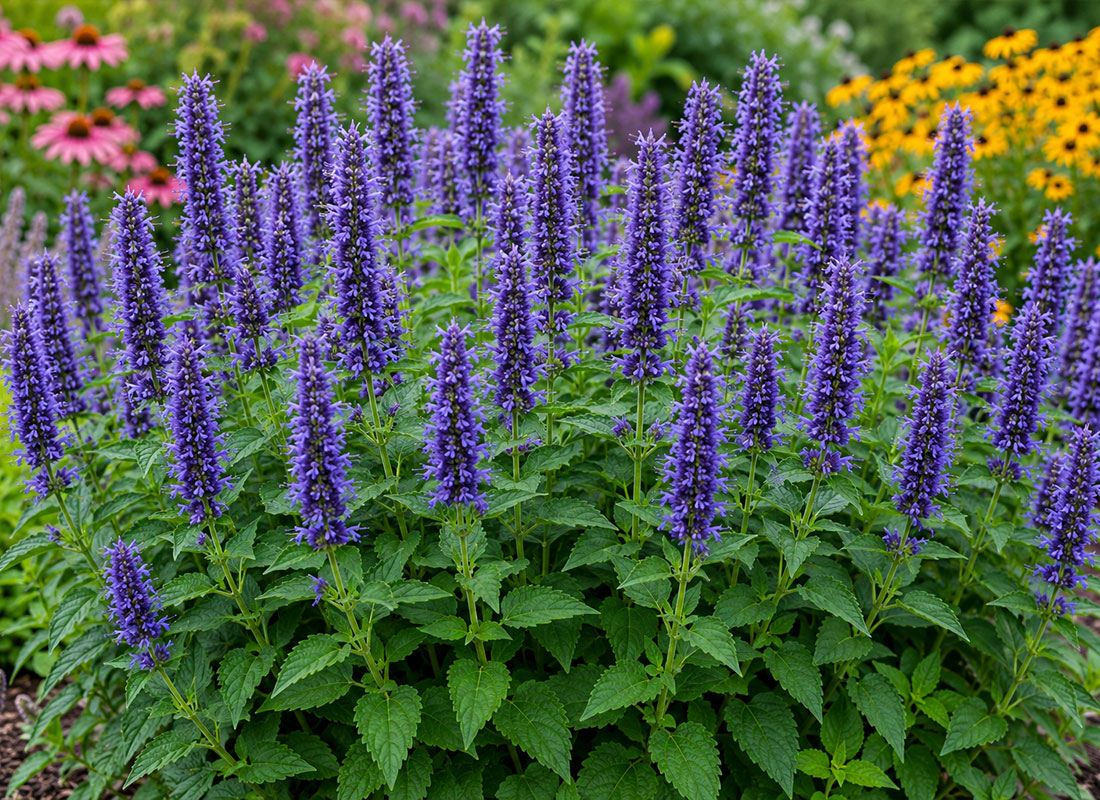
Agastache ‘Blue Boa’
Agastache ‘Blue Boa’ (often sold under that name or as a selection of hyssop or hummingbird mint) is one of the most vibrant, fragrant, and garden‑friendly perennials you can plant. With striking blue‑lavender flower spikes, aromatic foliage, and broad appeal to pollinators — yet low appeal to deer and rabbits — it is the ideal choice for backyard and cottage gardens alike.
In this blog post you’ll learn:
- What Agastache ‘Blue Boa’ is
- Why it’s deer‑resistant
- How to grow and care for it (with tips, problems & solutions)
- How it benefits pollinators
- Garden design ideas featuring Blue Boa
What Is Agastache ‘Blue Boa’?
Agastache is a genus of fragrant flowering plants in the mint family (Lamiaceae). ‘Blue Boa’ is a cultivar specially selected for its rich blue‑purple spikes, compact habit, extended bloom period, and strong fragrance.
Key features:
- Botanical name: Agastache ‘Blue Boa’
- Common names: Blue Boa hyssop, hummingbird mint
- Height: ~24–30 in (60–75 cm)
- Spread: ~18–24 in (45–60 cm)
- Flower color: Blue‑lavender
- Bloom time: Mid summer through fall
- Foliage: Aromatic, fragrant leaves
- Plant type: Perennial (in USDA Zones ~5–9)
Unlike some Agastache cultivars that can get lanky or flop, ‘Blue Boa’ tends to stay neatly upright with strong stems, making it excellent for front or middle borders and containers.
Deer Resistance — Myth or Garden Reality?
One of the most exciting things about Agastache ‘Blue Boa’ is its reputation for being deer‑resistant.
Why It’s Less Attractive to Deer
Deer tend to avoid plants with:
- Strong scents
- Bitter or pungent foliage
- Aromatic essential oils
- Hairy or textured leaves
Agastache meets all of the above: those fragrant mint‑like leaves aren’t just delightful to us — they’re off‑putting to deer and rabbits.
Scientifically, deer dislike aromatic compounds (like those in mint family plants) because they signal potential unpalatability or even toxicity — even if the plant is harmless. That’s why many mint‑family herbs fare better in deer‑prone gardens.
Bottom line: While no plant is entirely “deer‑proof,” Agastache ‘Blue Boa’ is highly deer‑resistant, especially once established.
Flowers That Keep on Blooming
One of the biggest reasons gardeners fall in love with Agastache ‘Blue Boa’ is its extended bloom period.
Bloom Time
- Starts: Mid‑summer (often July)
- Peaks: August–early September
- Ends: First frost in fall
That’s a long season for a perennial, especially one with such visually striking upright spires.
What the Flowers Look Like
- Dense whorls of tiny tubular flowers
- Each spike can attract dozens of pollinators per day
- Petals are a saturated blue‑lavender that stands out in gardens
These vertical spikes add a sense of height and rhythm to borders and containers without overwhelming other plants.
Pollinators Love It
Agastache isn’t just pretty — it’s functional.
Beneficial Visitors
This plant is a magnet for:
- Bees (native bees and honeybees)
- Butterflies
- Hummingbirds
- Ladybugs and other beneficial insects
The flower shape is ideal for long‑tongued pollinators, and the abundant nectar keeps visitors returning through the season.
Growing Agastache ‘Blue Boa’
Here’s how to give it the best chance to thrive.
Site & Light
- Best: Full sun (6–8+ hours/day)
- Okay: Light afternoon shade (but less flowering)
Bright light gives you the densest blooms and strongest stems.
Soil
- Prefers: Well‑drained soil
- Tolerates: Moderately poor or sandy soil
- Avoid: Heavy clay or wet feet
Poorer soils often produce taller, more floriferous plants — as long as drainage is good.
Water
- Water regularly until established
- After that, Blue Boa tolerates moderate drought
Over‑watering or soggy soil can lead to root rot. Good drainage is key.
Spacing
Give each plant about 18–24 inches of space. This prevents crowding, improves airflow, and helps reduce disease.
Care & Maintenance Tips
Here are some practical tips to keep your plants healthy and blooming:
Deadheading vs. Cutting Back
- Light deadheading can encourage more blooms
- After heavy flowering, you can cut back by ~⅓ to refresh the plant
However, don’t over‑trim too late in the season — the plant needs top growth to withstand cooler weather.
Supporting Flowers
‘Blue Boa’ is generally sturdy, but if planted in rich soil or a super‑moist site, you may need:
- Light staking
- Support rings
This keeps spikes upright in wind and rain.
Fall & Winter
In Zones 5–9 the plant will usually die back in winter and return in spring. You can:
- Leave seed stalks for winter interest and birds
- Or cut back in late fall for a tidier look
Mulching with a light layer of compost or straw in colder regions helps protect crowns.
Common Problems (And Fixes)
Leggy Growth
Cause: Too little sunlight
Fix: Relocate to a sunnier spot, prune lightly to encourage branching
Root Rot
Cause: Poor drainage or over‑watering
Fix: Improve drainage with sand/gravel mix; avoid wet sites
Slugs or Snails
Although deer avoid Agastache, snails or slugs sometimes snack on tender new shoots.
Tip: Use diatomaceous earth around the base or a beer trap nearby.
Garden Design Ideas
Here are some ways to showcase Agastache ‘Blue Boa’ in your garden:
Pollinator Border
Pair with:
- Rudbeckia (black‑eyed Susan)
- Salvia (meadow sage)
- Echinacea (coneflower)
This creates a continuous summer display of color and nectar.
Cottage Garden Style
Mix with:
- Lavender
- Coreopsis
- Catmint (Nepeta)
The similar blue/purple palette feels cohesive and calming.
Container Planting
Place a few in a large pot with:
- Trailing sweet potato vine
- White alyssum
- Calibrachoa
These combinations bring rich texture and contrast.
Deer‑Protected Beds
If deer pressure is high, surround beds with plants that deer avoid (aromatic herbs, ornamental alliums) — complementing Agastache beautifully.
Fun Facts
- Agastache comes from Greek words meaning “very fragrant spike,” reflecting its scent.
- In addition to attracting pollinators, the plant’s nectar quality is high, making it popular in pollinator gardens.
- Some beekeepers prize Agastache nectar as a unique flavor source in honey.
Frequently Asked Questions
How tall does Agastache ‘Blue Boa’ get?
About 2–2.5 feet tall on average — though blooms can extend the effective height visually.
Is it easy to start from seed?
Yes. Sow indoors 8–10 weeks before the last frost, or direct‑seed after frost danger has passed. Germination is usually strong with light exposure.
Can it handle a long drought?
Once established, yes — Blue Boa is quite drought‑tolerant, though moderate moisture keeps blooms lush.
Will it come back every year?
In USDA Zones ~5–9, it typically returns reliably.
Final Thoughts
If you’re looking for a beautiful, fragrant, long‑blooming, deer‑resistant perennial that supports pollinators and fits in almost any garden style, Agastache ‘Blue Boa’ is an excellent choice.
From sunny perennial borders to container plantings and pollinator gardens, this cultivar gives you season‑long color, structure, and ecological benefits with relatively low maintenance.
Plant it once — and you’ll likely find it returning proudly each season.
If you want, I can also add more high-quality pictures with captions for each section to make the blog more visually appealing and ready for publishing.
Do you want me to do that next?